Nottingham Architecture: A City Break Guide to the Buildings
Nottingham architecture for city-break planners: the buildings worth seeking out, how architecture is taught at the university, and what to check before you travel.
On this page
Nottingham gives an architecture-minded visitor two separate things to plan around: the buildings themselves and the city's role as a place where architecture and engineering are taught. This guide treats them as distinct trips so you can decide which one you are actually making. If you want to look at buildings, build the day around a walk and a museum; if you are thinking about studying the subject, start with the University of Nottingham's own course pages.
For the sightseeing side, the sensible approach is to pair a walk through the historic core with one of the city's museums, which gives you interiors, interpretation and somewhere dry to think. For the study side, the useful detail is entry requirements and what a taster course actually involves, because those tell you far more than a prospectus photograph. The sections below take each in turn.
Where architecture is studied in Nottingham
Architecture at Nottingham is taught at the University of Nottingham, whose architecture department describes itself as career-focused and as nurturing architects, engineers and built environment professionals. If you are weighing up the city as a place to study, that framing is worth reading in full on the department's own page rather than relying on second-hand summaries.
The distinction matters for visitors too: a city with a substantial architecture school tends to have a visible culture of studios, talks and built-environment events around its campus, which is a different experience from simply photographing old facades. Plan a campus visit separately from a city-centre walk rather than trying to fold the two into one afternoon.
Studying architecture at Nottingham: what the entry requirements look like
The Sutton Trust summer school strand at Nottingham asks for one or more of Physics, Maths, Design and Technology or Geography at A-level or equivalent. That is a useful signal of the subjects that keep an architecture or engineering application open, and it is specific enough to act on when choosing A-levels.
Treat that list as a guide for the summer school rather than a complete statement of degree requirements. The University of Nottingham publishes its own entry criteria for each course, and those are the figures and grades that govern an application. Check the course page for the year you would actually start before you commit to subject choices.
The Sutton Trust Architecture and Engineering summer school
The strand is designed for students drawn to the built environment, sustainable technologies or innovation, and it explores several fields of engineering at Nottingham. Teaching happens through tours, labs and seminars with academics and current students, alongside information about relevant degree courses. It is a taster of the working life of the subject rather than a lecture series.
The 2026 run was listed for 5 July to 10 July 2026 with 25 programme places, and applications for UK Summer Schools 2026 are closed, with registration of interest open for 2027. Treat those dates as course information for that year, not as a live booking window. If you want a place in a future cohort, register interest early and read the eligibility and how-to-apply pages on the Sutton Trust site before assuming you qualify.
Nottingham runs sibling strands in the same window, including Liberal Arts, Medicine and Medical Sciences, and Maths, Physics and Computer Science. That is worth knowing if your interests sit between architecture and another subject, because the strands share a campus and a week but not a syllabus. Compare the descriptions before applying to more than one.
Residential architecture in Nottingham: what local practices actually do
A useful way to read the city's buildings is to look at what architects working here describe themselves as doing. Marcus Tams Architects, a residential practice founded in 2011 and based on Bridgford Road in West Bridgford, sets out its work as new builds, house extensions and renovations of period and listed properties, from concept through planning and building regulations to completion. That range, rather than a single landmark, is the honest picture of day-to-day architecture in Nottingham.
Their published projects show the same pattern at a smaller scale: a former toll house at Ruddington converted into a family home, a reworked and extended house at Edwalton, and an extension to a period home at Radcliffe-on-Trent that uses changes in level across the site. None of these is a public attraction, and you should not turn up expecting to look round. Read them as examples of how the region's older housing stock is adapted rather than replaced.
One project worth noting for the technically curious is a replacement dwelling in Cheshire built from Insulated Concrete Formwork as part of a strategy to minimise energy demand. It is outside Nottingham, but it shows the sustainability argument that also shapes the university's built-environment teaching. If construction and energy are your interest, that thread connects the study and sightseeing halves of this guide.
What to look for on a walk: heritage and period buildings
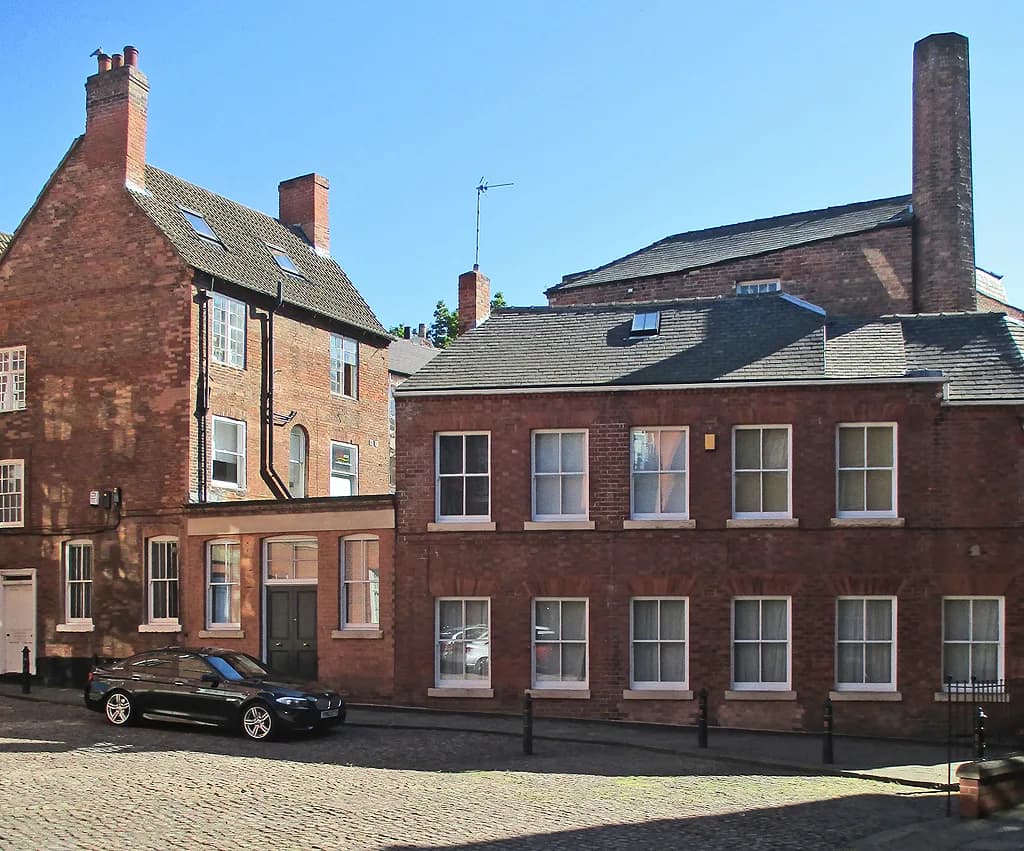
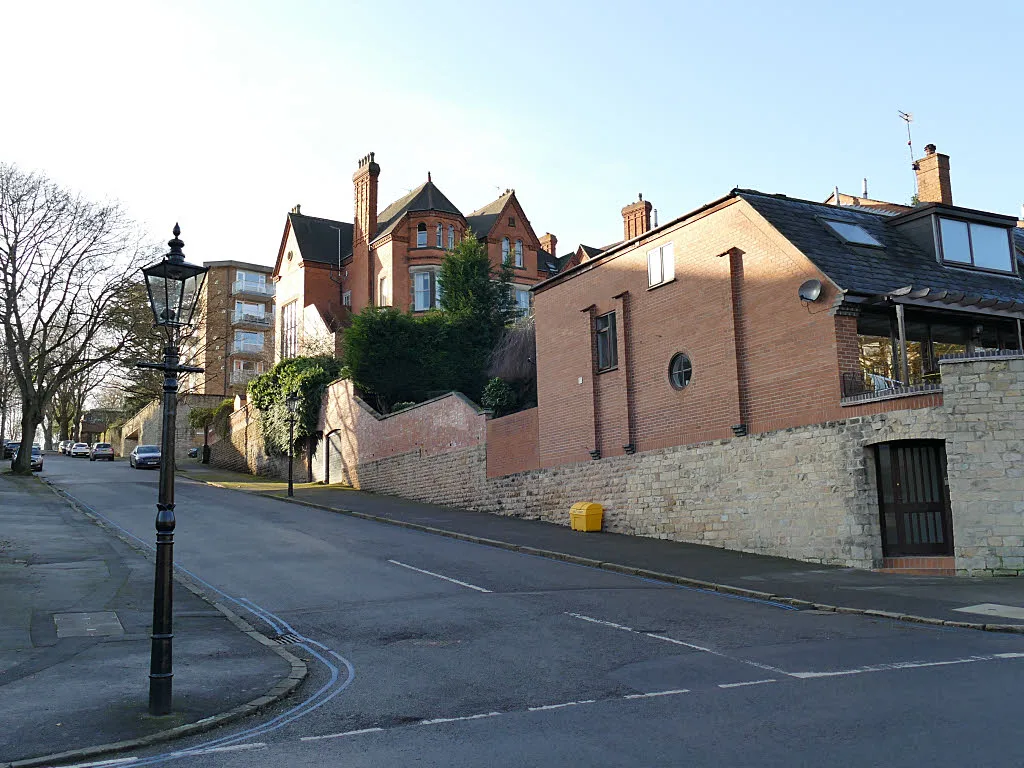
The clearest architectural theme running through the local work described above is adaptation of older buildings: listed buildings, barn conversions and period properties kept in use rather than demolished. On a walk, that translates into looking at rooflines, later additions and how doorways and windows have been reworked, which is often more revealing than a grand facade. It also means the interesting buildings are frequently in residential streets rather than on a single processional route.
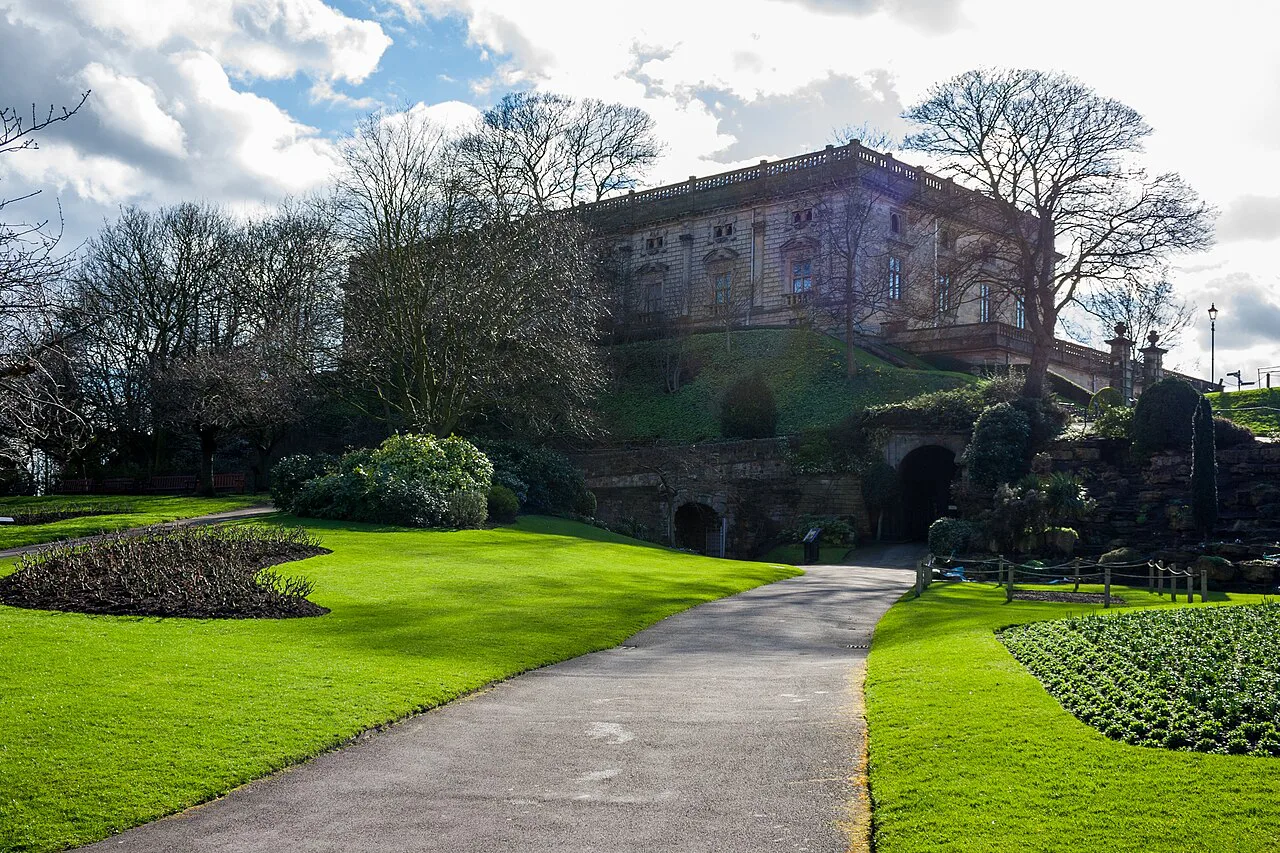
Pair that with the city's heritage collections and you get context for what you are seeing. The museums in Nottingham cover the city's history in a way that makes street-level detail legible, and a walking tour will put the pieces in order if you would rather be guided than self-directed. Allow a half day for a focused architectural walk and a museum, and longer if you intend to cross the city on foot.
If your interests lean towards the medieval city or its later history, build the walk around those themes instead of trying to see everything. The history of Nottingham gives you the chronology, and the medieval material covers the earlier layers of the centre. Trying to cover Roman to modern in one day produces a rushed, unsatisfying circuit.
Pairing architecture with museums and galleries
Architecture and collections reward the same sort of visit: slow, selective and indoors when the weather turns. The free museums in Nottingham let you build a day where the paid elements are optional, which suits a city break where you want one anchor and room to wander. Check what each venue currently has on before you set out, since displays change.
If you want contemporary work alongside historic buildings, the art galleries in Nottingham are the natural complement to a morning spent looking at facades and conversions. Many galleries sit in buildings that are themselves worth a look, which is the efficient way to combine the two interests.
For an architecture-led break, consider pairing a Nottingham walk with a day in another Midlands city for comparison. Birmingham architecture gives you a contrasting set of buildings and, if modernism is your interest, the organisations that document it. It is a full day out rather than an afternoon, so plan it as a separate excursion.
Tickets, booking and practical trade-offs
The honest trade-off in Nottingham is between free and booked. National museums in Britain generally do not charge for entry, while castles and historic houses usually do, and each site's own page is the only reliable place to confirm the current position for a specific site. Decide in advance whether you are doing a free museum-led day or paying for one big heritage visit, because mixing the two usually means rushing both.
Bookable elements are the ones that sell out: guided tours, talks and timed entry at popular sites. Check each venue's own page for opening days and any booking requirement before you travel, particularly outside the summer months when hours shorten. Leave slack in the day rather than chaining timed slots, since a single overrun can derail an afternoon.
If you are combining architecture with the city's older sites, look at the castles near Nottingham as a separate outing rather than an add-on to a city-centre walk. Each has its own opening arrangements, so plan one per day and check the individual castle's website before setting off.
Getting around and where to base yourself
The university sits away from the historic core, so treat a campus visit and a city-centre walk as two trips rather than one loop. West Bridgford, where the architectural practice above is based, is a separate neighbourhood again, and it is a residential area rather than a visitor district. Plan your base around the centre if sightseeing is the priority and around the university if studying is.
Distances in central Nottingham are manageable on foot, which makes a building-focused day easy to organise without a car. Check bus and tram routes with Nottingham City Transport and Nottingham Express Transit (NET) for the campus leg, and check the last services back if you are staying out for an evening event.
If your trip is built around food as well as buildings, afternoon tea in Nottingham fits neatly between a morning walk and an evening tour, and the Lace Market area rewards a slow look at the buildings while you are there. Book tea in advance where the venue takes reservations.
Plan Your Visit
Decide first which trip you are taking: a building-focused city break, a study-focused look at the University of Nottingham, or both across separate days. Sightseeing rewards a half day on foot plus one museum; the study question is answered by the department's course pages and the Sutton Trust's application route.
Then confirm the volatile details before you travel: current opening days, whether a site charges, and whether anything needs booking. Operator pages are the only place those figures are kept up to date, and they change with the season. Build the rest of the day around one anchor rather than a list.
Explore more Nottingham guides
Frequently Asked Questions
Can you study architecture at the University of Nottingham?
Yes. The University of Nottingham has an architecture department that describes itself as career-focused and as training architects, engineers and built environment professionals. Entry criteria differ by course and year, so check the specific course page before applying rather than relying on general descriptions.
What A-levels do you need for architecture at Nottingham?
The Sutton Trust summer school strand in Architecture and Engineering at Nottingham asks for one or more of Physics, Maths, Design and Technology or Geography at A-level or equivalent. That is the summer school's own requirement, not the degree requirement, so confirm grades and subjects on the University of Nottingham course page for the year you would start.
Is there a Sutton Trust architecture summer school at Nottingham?
Yes. The Architecture and Engineering strand ran at the University of Nottingham from 5 to 10 July 2026 with 25 places, using tours, labs and seminars with academics and current students. Applications for UK Summer Schools 2026 are closed, and the Sutton Trust invites registration of interest for 2027.
What does a residential architect in Nottingham work on?
Marcus Tams Architects, a residential practice founded in 2011 and based in West Bridgford, describes its work as new builds, house extensions and renovations of period and listed buildings, from concept and planning through building regulations to completion. Its published projects include a converted toll house at Ruddington and an extension to a period home at Radcliffe-on-Trent.
Can you visit the buildings shown in local architects' project portfolios?
No. The projects published by Nottingham practices are private homes, including converted and extended houses in Ruddington, Edwalton and Radcliffe-on-Trent. Use them to understand how the region's older housing stock is adapted, and look at public streets, museums and galleries for buildings you can actually go into.
How long do you need to see Nottingham's architecture?
Allow about half a day for a focused walk through the historic centre plus one museum, and add a separate half day for a campus visit to the University of Nottingham, which sits away from the core. Trying to cover the centre, the campus and a heritage site in one day leaves too little time at each.
Do you need to book Nottingham's architecture-related sites in advance?
Bookable elements are guided tours, talks and timed entry at busy sites, and these are the things that sell out. Current opening days and whether booking is required vary, especially outside summer, when hours shorten, so check ahead.
What else can you combine with an architecture-focused visit?
Museums and galleries make the obvious pairing, since many sit in buildings worth looking at and give you somewhere indoors when the weather turns. Afternoon tea in the Lace Market area fits between a morning walk and an evening tour, and a day in Birmingham gives you a contrasting set of buildings if modernism interests you.
Sources
Notes for your next city break
Optional updates to our UK city guides.
You might also like
Continue reading
More guides you'll find useful