Museums in Canterbury: The Beaney, Roman Museum Guide
Plan a museum day in Canterbury with The Beaney and the Canterbury Roman Museum. See what each holds and how to fit them around the cathedral.
On this page
The short answer is that Canterbury's two headline museums are The Beaney House of Art & Knowledge and the Canterbury Roman Museum, both run by Canterbury Museums & Galleries. The Beaney is the broader of the two, combining art, natural history and a working public library in one building. The Roman Museum does a narrower job, telling the city's Roman story, which makes it a natural pairing with a walk past the cathedral and the old city walls.
The Beaney House of Art & Knowledge
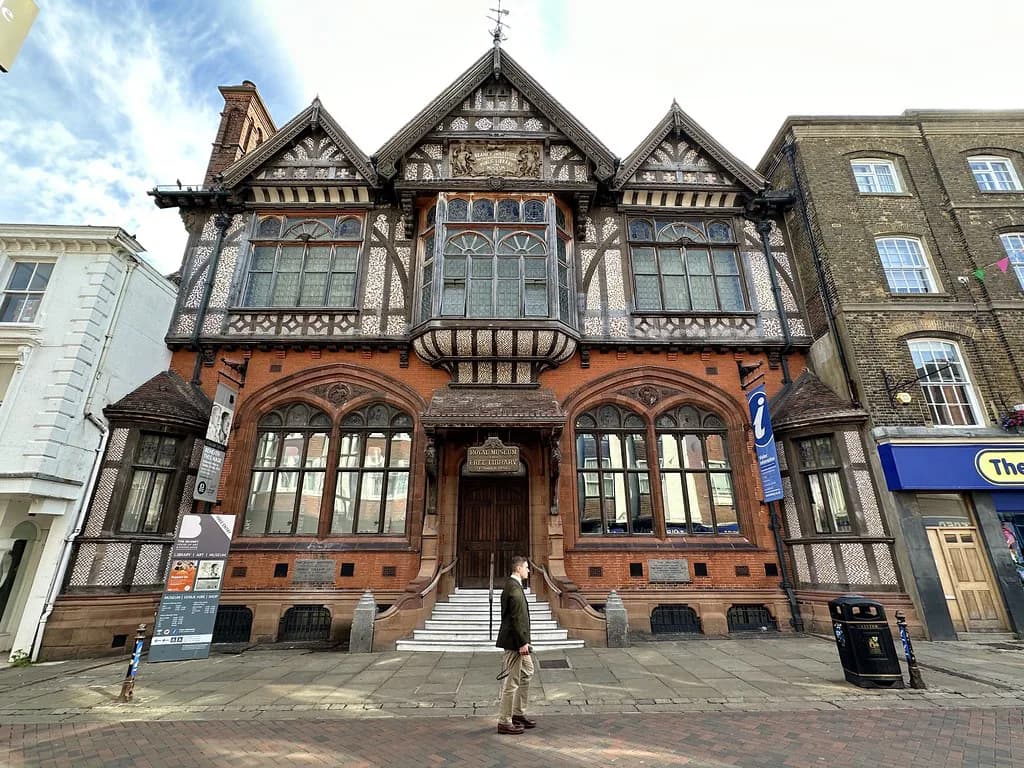
The Beaney is Canterbury's main art and knowledge venue, and it is a mixed-purpose building rather than a single gallery. Art, natural history and a public library share the same address, so a visit can move from display cases to bookshelves without leaving the building. That combination is what makes it worth more time than a quick look at one exhibition room, and it explains why the building's collections are treated across several named galleries.
If you are comparing Canterbury's art spaces, the building works as an anchor for a gallery-focused day rather than a stand-alone stop. Its galleries sit alongside the library, which means the atmosphere is different from a purpose-built museum: quieter study areas share a roof with exhibition spaces. For more on the city's commercial and public galleries, the guide to art galleries in Canterbury sets out the wider options.
What to See at The Beaney
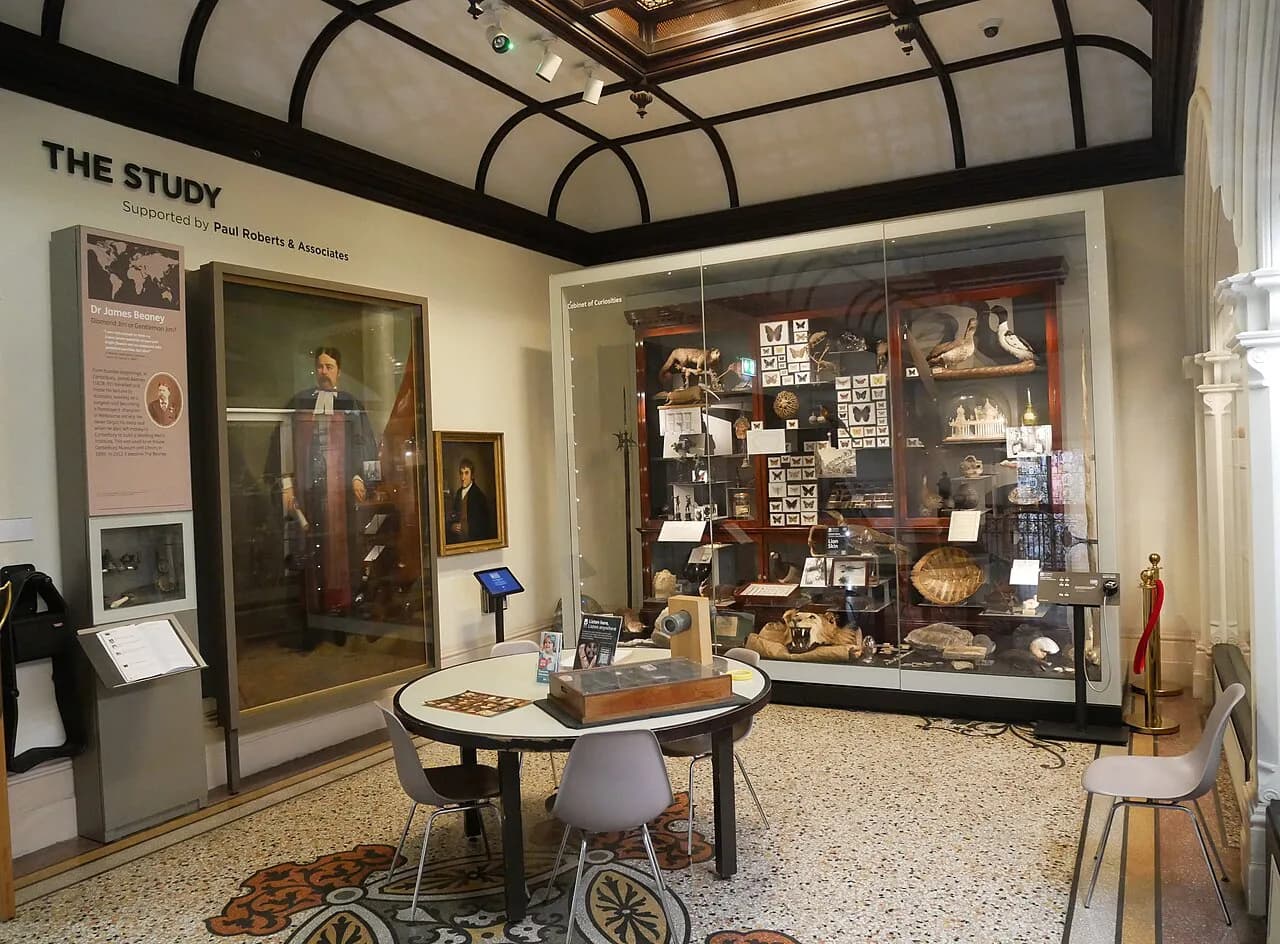
The permanent collections are split into named galleries, which helps you plan rather than drift. The Garden Room, Colour & Camouflage, People & Places, Explorers & Collectors and Materials & Masters each hold distinct material, while The Front Room, The Smallfilms Gallery, The Study and the Learning Lab add temporary displays, hands-on space and a room with views over Canterbury's rooftops. Pick two or three of these to do properly rather than trying to cover all of them in one pass.
The Learning Lab is the one to note if you are travelling with children, since it is described as a modern space with views over the city rather than a hushed display room. The Study and The Front Room suit visitors who prefer smaller, more focused spaces to large permanent halls. These are not separate museums with separate tickets, so your time is best spent deciding which galleries match your interests before you arrive.
Bagpuss and the Smallfilms Gallery
The Smallfilms Gallery is a temporary gallery space celebrating the work of Peter Firmin and Oliver Postgate, the BAFTA award-winning duo behind Smallfilms. A children's television character sits in a Canterbury museum because Firmin and Postgate created Bagpuss through that company, and the museum holds a Bagpuss collection item. For families, it is often the reason to choose The Beaney over a more conventional gallery.
Treat the Smallfilms space as a changing display rather than a fixed guarantee. Its contents are tied to the museum's programme, so what you see depends on when you travel, and the museum's What's On page is where the current programme is published. If Bagpuss is the draw for your children, check that page before you build the day around it.
The Special Exhibitions Room
The Special Exhibitions Room hosts a rolling programme that complements the permanent collections, often with national and international loans of artefacts and artworks spanning historical and contemporary work. Because the displays change, this is the part of The Beaney that rewards a repeat visit. The museum publishes current and upcoming exhibitions on its What's On page, so that is the page to check for what is actually on during your dates.
The exhibitions come with associated events and activities for all ages, which is worth knowing if you want to time a visit around a talk or family session rather than simply walking in. Plan the permanent galleries around the special exhibition rather than the other way about, since the temporary show is the one with a deadline. If your trip is fixed, look at the programme first and then shape the rest of the day.
Canterbury Library Inside The Beaney
Canterbury Library, inside The Beaney, was the first publicly funded library in Great Britain, created through interpretation of the Museums Act 1845 for the provision of a museum of arts and science. That history is the reason a lending library and a museum share a building, and it is a genuine oddity worth pointing out to children. The library is now part of the Kent County Council network rather than a museum department.
For visitors, the library is more than a historical curiosity: it offers books, DVDs, CDs, talking books and local history resources, and you can browse the Kent Libraries catalogue, reserve and renew items online. Public access computers and Wi-Fi sessions need booking, either online or by phone on 03000 413131. Current opening hours are published on the Canterbury Library page of the Kent County Council website.
The Canterbury Roman Museum
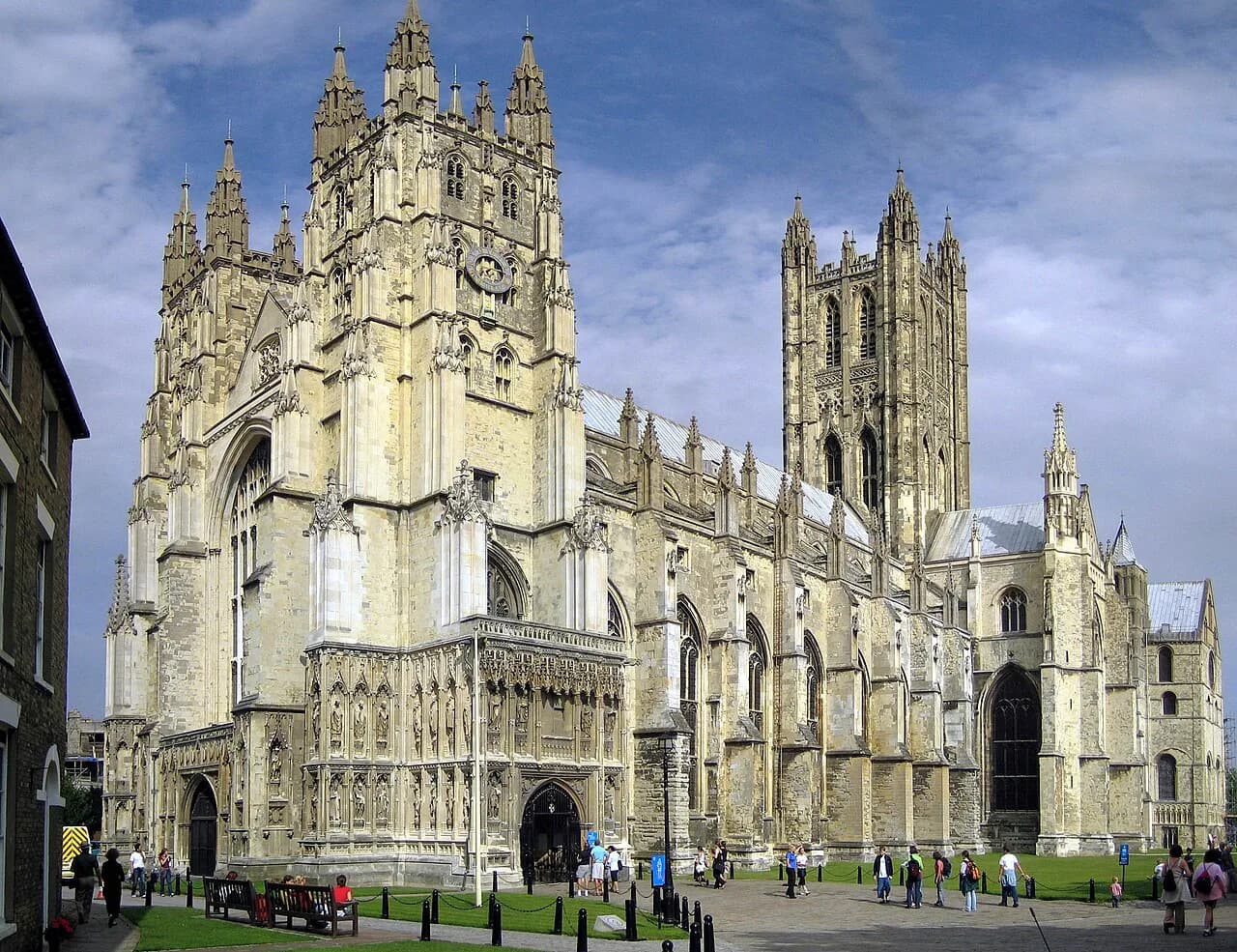
The Canterbury Roman Museum is the second site run by Canterbury Museums & Galleries and the one to choose if you want the city's Roman layer explained in a single place. Pair it with a walk that takes in the cathedral and the surviving city walls, and the street pattern starts to make more sense. It works best as a compact, focused stop rather than an all-day destination.
Because the Roman Museum is a separate building from The Beaney, it needs its own slot in your plan rather than being tacked onto the same visit. Give it a clear block of time and treat the rest of the day as walking and cathedral territory. Anyone extending the trip towards the city's medieval defences should look at the castles near Canterbury, which cover the later fortifications rather than the Roman town.
Opening Times, Entry Prices and Booking
Entry prices, opening days and any booking arrangements for both museums are published by Canterbury Museums & Galleries on its Visit and Opening Times pages, which is where to confirm them before you travel. Ticket structures can change with the season and with special exhibitions, so a figure quoted in a secondary guide is a poor basis for budgeting. Budget from the museum's own published prices and check again in the week before your visit.
There is one place where Canterbury Museums & Galleries does publish a firm charge: the first hour of staff time on collections enquiries is free, with each additional hour charged at £50, discussed before any work is carried out. That is a research service rather than an admission fee, but it shows the museum publishes its charges openly. Use the same pages for admissions rather than relying on memory of a previous trip.
Free Versus Paid: How to Tell
The reliable way to tell which Canterbury museums charge is to look at the individual museum's own visitor information rather than assuming from the building's name or size. National museums in Britain are often free, but a council-run service like Canterbury Museums & Galleries sets its own arrangements, and those can differ between The Beaney and the Roman Museum. Treat free entry as something to confirm, not something to assume. The same applies if you are weighing up museums in Birmingham, where free and paid sites sit side by side and each one publishes its own terms.
If you are planning several paid heritage stops, work out which ones matter most before you commit, since cathedral entry and castle admissions add up alongside museum tickets. The museum service's own pages are the place to start, and the Canterbury Attractions: 8 Visitor Guides hub covers the other major sights so you can judge the total. That way a single expensive ticket does not crowd out the rest of the day.
How Long to Allow
A realistic half day is The Beaney's permanent galleries plus the Special Exhibitions Room, with the library as a short detour rather than a destination in itself. A full day adds the Canterbury Roman Museum and a walk through the cathedral precinct, which is enough without rushing. These are suggestions for pacing, not measured visit times, so adjust them to how long you actually linger.
Families should allow extra time at The Beaney for the Smallfilms Gallery and the Learning Lab, and less time in the quieter galleries. If you are short of time, choose the special exhibition plus one permanent gallery and leave the rest. The common error is trying to see everything in one morning and arriving at the Roman Museum already tired.
Getting There and Getting Around
Canterbury's centre is compact, and the museums sit within easy walking distance of the cathedral and the main shopping streets, so you can leave the car and move on foot. The Beaney's visitor information includes a How to Find Us page for the precise approach. Allow for pedestrianised streets and crowds in the middle of the day.
Build the day as a loop rather than a series of out-and-back trips: museums first, then the cathedral, then the walls and gardens at the edge of the centre. That order keeps the indoor stops together if the weather turns. The Canterbury Attractions: 8 Visitor Guides hub is a sensible starting point for plotting the walking order.
Accessibility at Both Museums
Canterbury Museums & Galleries publishes separate accessibility pages for The Beaney and for the Canterbury Roman Museum, which is the right place to check step-free routes, lifts and facilities before you arrive. The two buildings are different in age and layout, so what applies at one does not automatically carry over to the other. If anyone in your group has mobility needs, read both pages rather than one.
Nearby Heritage to Pair With a Museum Visit
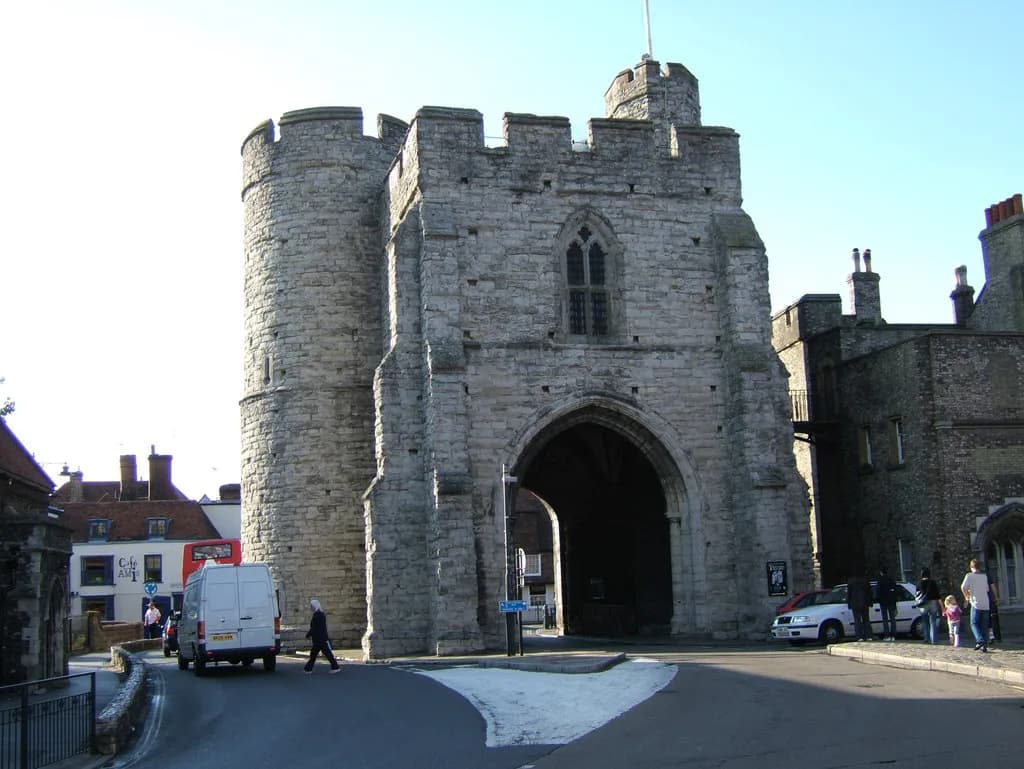
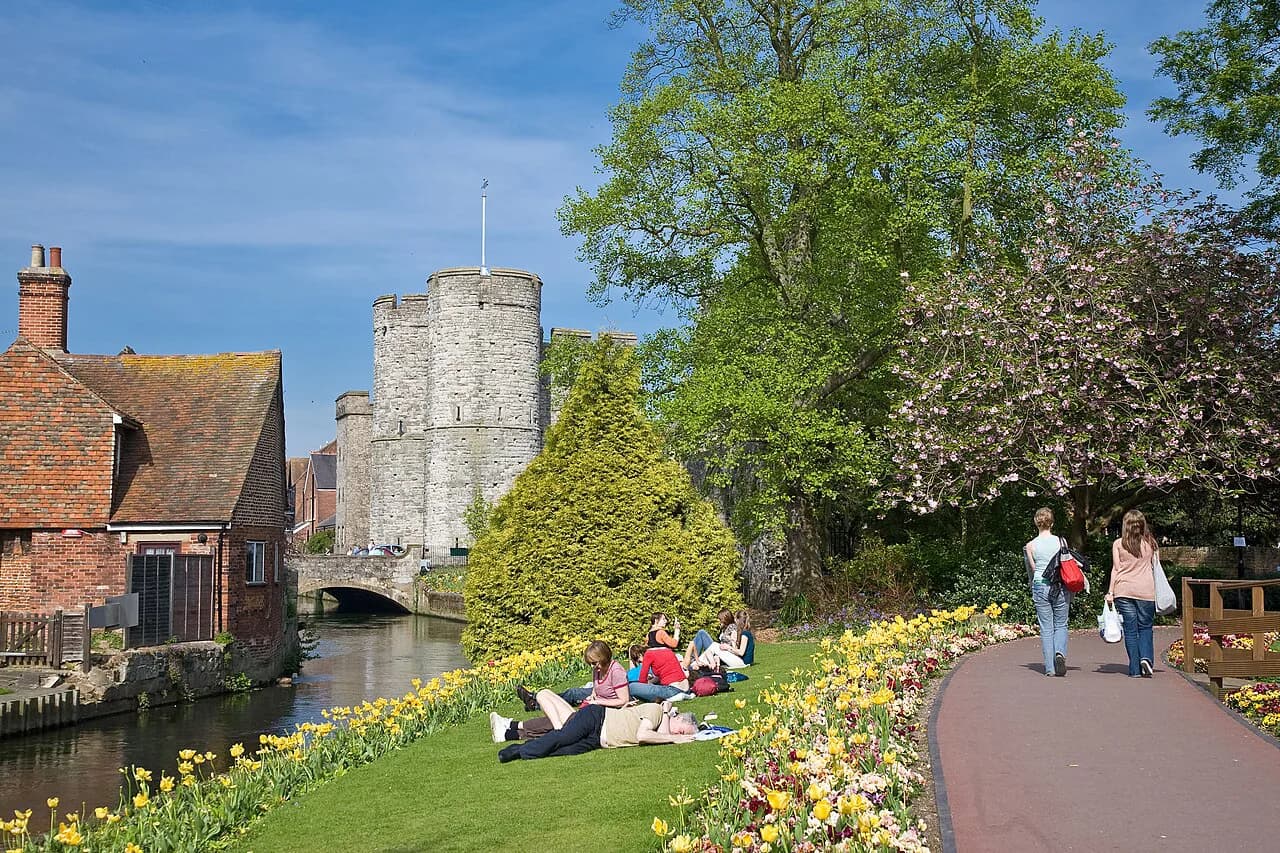
Canterbury Cathedral, Westgate Towers and Westgate Gardens sit close enough to combine with a museum morning, and together they give the city's medieval and later history alongside the Roman story. The towers are the surviving gate of the medieval wall circuit, while the gardens along the river make a natural place to stop between indoor visits. For the wider picture across the centuries, the history of Canterbury fills in what the museums only sample.
If you want an evening activity after the museums close, ghost tours in Canterbury trade in legends rather than documented hauntings, so treat the stories as storytelling and enjoy them on those terms. They suit groups and families with older children better than a daytime museum slot. Book nothing on the strength of a tour operator's marketing alone without confirming the details directly.
Common Mistakes
The most frequent mistake is arriving without checking hours, then finding the day's shape dictated by which building is open. The second is missing the library and the upstairs galleries at The Beaney because the ground floor looks like the whole museum. The third is over-packing: two museums, a cathedral and a wall walk is already a full day.
A fourth mistake is assuming the Smallfilms Gallery or the Special Exhibitions Room holds the same displays as last time, when both are tied to a changing programme. Check What's On before travelling if a particular display is the reason for your visit. The museum service also publishes its own visitor FAQs, which answer the practical questions faster than hunting through individual gallery pages.
Plan Your Museum Day
Start with The Beaney for breadth, add the Canterbury Roman Museum for the city's earlier layer, and let the cathedral and walls fill the rest of the day. Decide which galleries and exhibitions matter most to your group, then confirm the current programme and admission details on the museum service's own pages before you set out.
Explore more Canterbury guides
Frequently Asked Questions
What museums are in Canterbury?
The two main museums run by Canterbury Museums & Galleries are The Beaney House of Art & Knowledge and the Canterbury Roman Museum. The Beaney combines art, natural history and Canterbury Library, while the Roman Museum concentrates on the city's Roman past.
What can you see at The Beaney?
The permanent collections are arranged in named galleries: The Garden Room, Colour & Camouflage, People & Places, Explorers & Collectors and Materials & Masters. The Front Room, The Smallfilms Gallery, The Study, the Learning Lab and the Special Exhibitions Room add changing displays and hands-on space.
Is there a Bagpuss museum in Canterbury?
The Beaney holds a Bagpuss item and has a temporary Smallfilms Gallery celebrating Peter Firmin and Oliver Postgate's work. Because that gallery is a changing space, check The Beaney's What's On page to see what is displayed during your visit.
Do you need to book Canterbury museums in advance?
Admission arrangements for The Beaney and the Canterbury Roman Museum are set out on the Canterbury Museums & Galleries visitor information pages. Public access computers and Wi-Fi sessions at Canterbury Library do need pre-booking, online or by phone on 03000 413131.
Which Canterbury museums are good for children?
The Beaney suits families best, thanks to the Smallfilms Gallery and the Learning Lab with its rooftop views. The Canterbury Roman Museum works as a shorter, focused stop that pairs well with a walk along the walls.
How long does the Canterbury Roman Museum take?
Treat it as a compact stop rather than a half-day out, and give it a clear block of time before moving on to the cathedral and walls. Exact visit length depends on your pace and on what is on display.
Sources
Notes for your next city break
Optional updates to our UK city guides.
You might also like

Continue reading
More guides you'll find useful