History of Cambridge: Which Sights Trace Its Story
A plain-English timeline of Cambridge's history, tied to the buildings and museums you can visit, from the 1209 founding of the university to the modern city.
On this page
Cambridge began as a river crossing. In the Middle Ages the settlement was known as Grantabridge, meaning the bridge over the river Granta, one of the sources of the River Cam.
The university arrived in 1209, when scholars fled Oxford and settled here, and it marked its 800th anniversary in 2009. Almost everything that matters in the story sits within walking distance of the Market Square, so a history-focused break can be done on foot with a couple of museums for context.
Roman and medieval roots: the bridge, the chapel and the city before the university
The Leper Chapel on Newmarket Road is one of the oldest surviving buildings in Cambridge, also known as the Chapel of St Mary Magdalene. It dates from the 12th century and was originally used to isolate victims of leprosy, which tells you how small and how exposed the medieval town was.
The name Grantabridge records the reason people settled here at all: a crossing point over the river Granta, one of the sources of the Cam. Standing on Magdalene Bridge or looking back from the Backs gives you the geography that made the town, before any college existed.
1209: the scholars leave Oxford and the university begins
A group of scholars fleeing Oxford founded the University of Cambridge in 1209. That makes it the world's fourth-oldest surviving university, and the date gives you a fixed anchor for everything that follows: the colleges, the chapels and the libraries are all later additions to a medieval institution.
The university's 800th anniversary fell in 2009, which is a useful way to grasp the scale: eight centuries of continuous teaching in a city you can cross in under half an hour. If you want the institutional story rather than the buildings, start with the University of Cambridge Museums, which hold collections assembled across that whole span.
College building: King's College Chapel, the Bridge of Sighs and the Mathematical Bridge
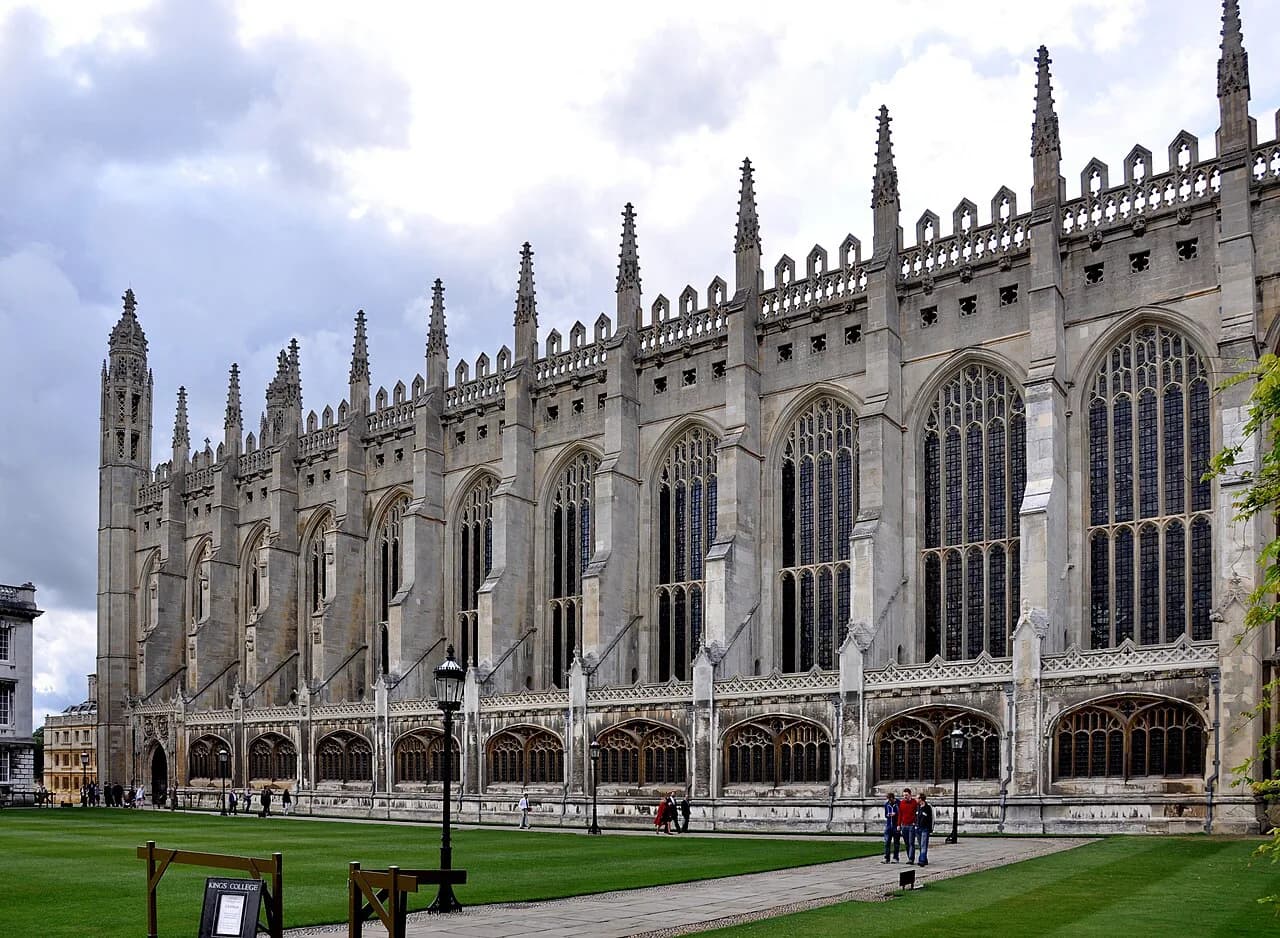
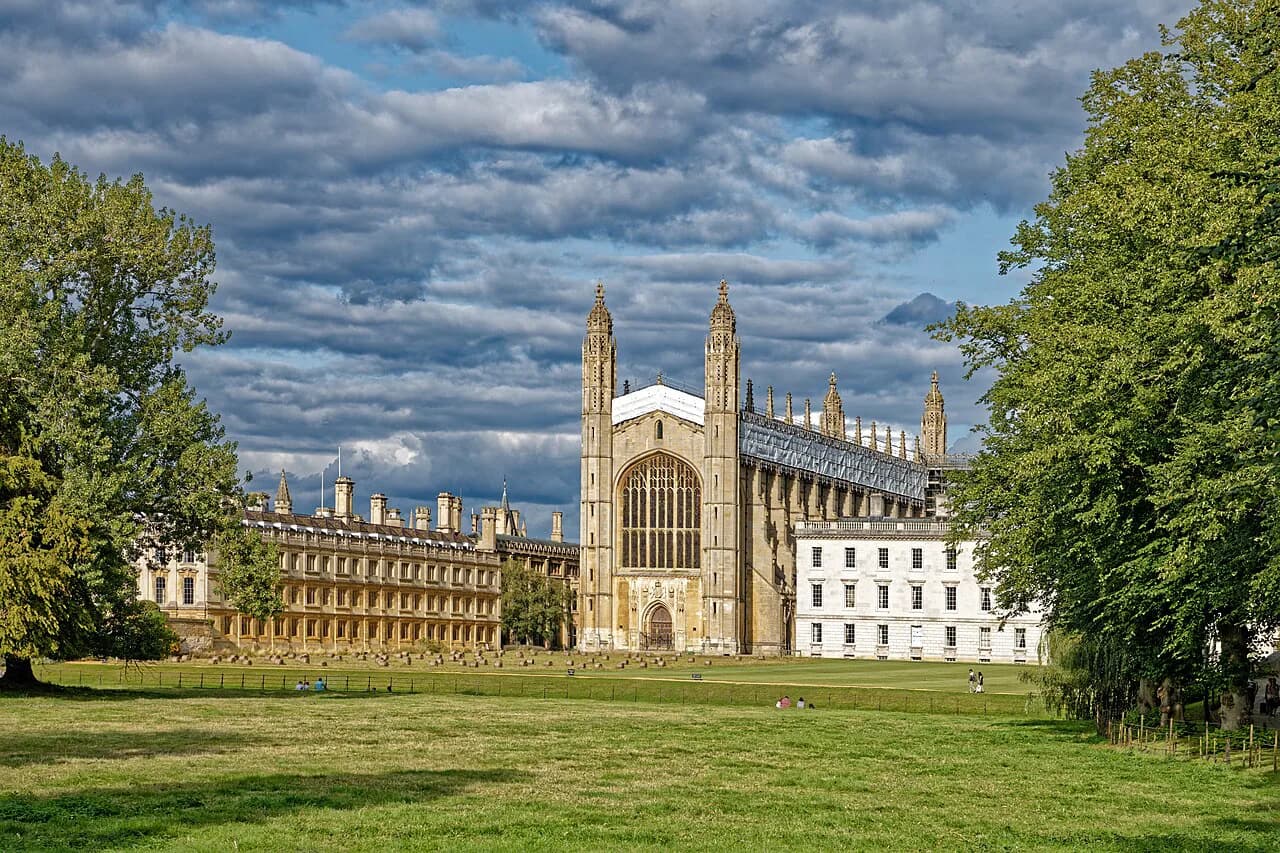
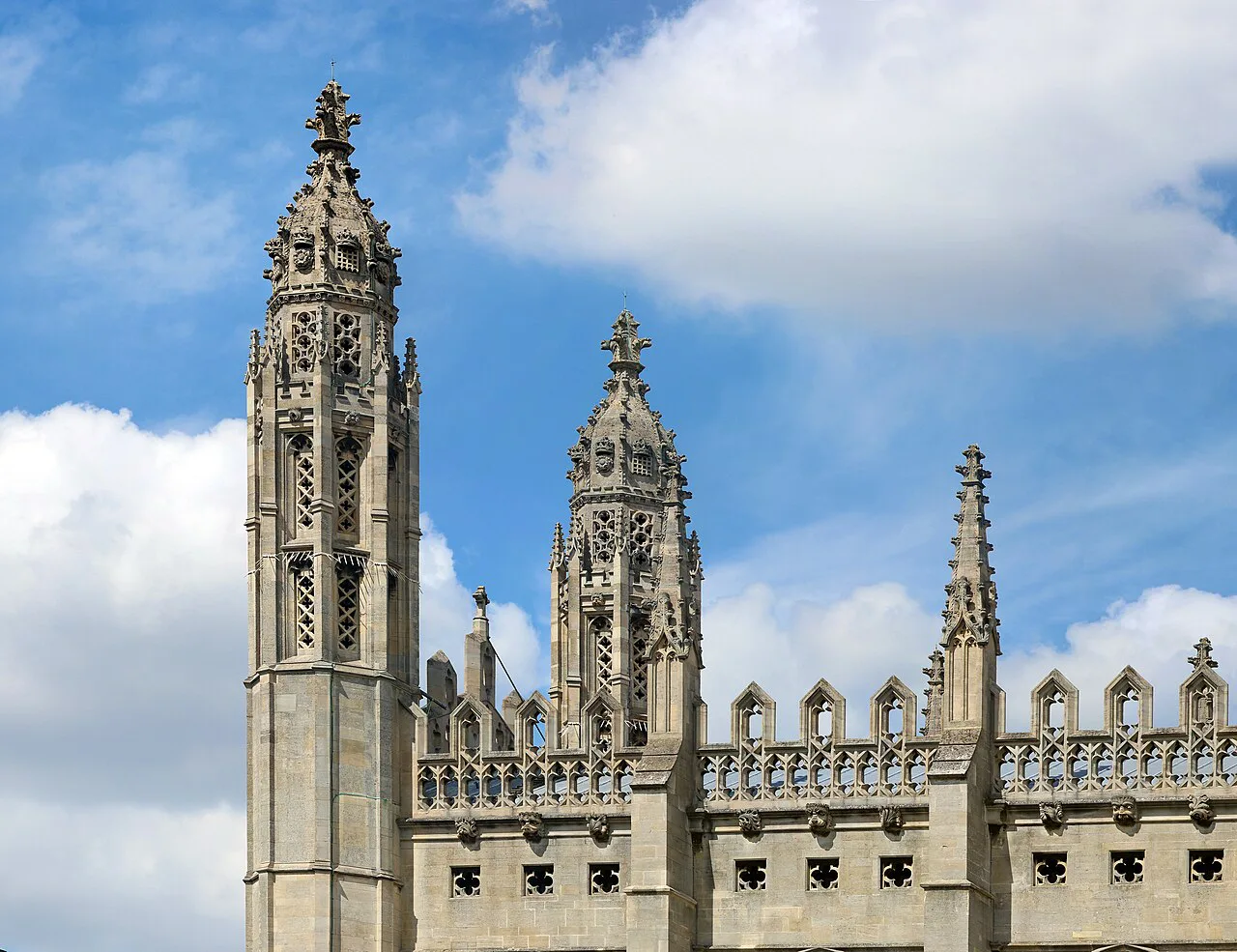
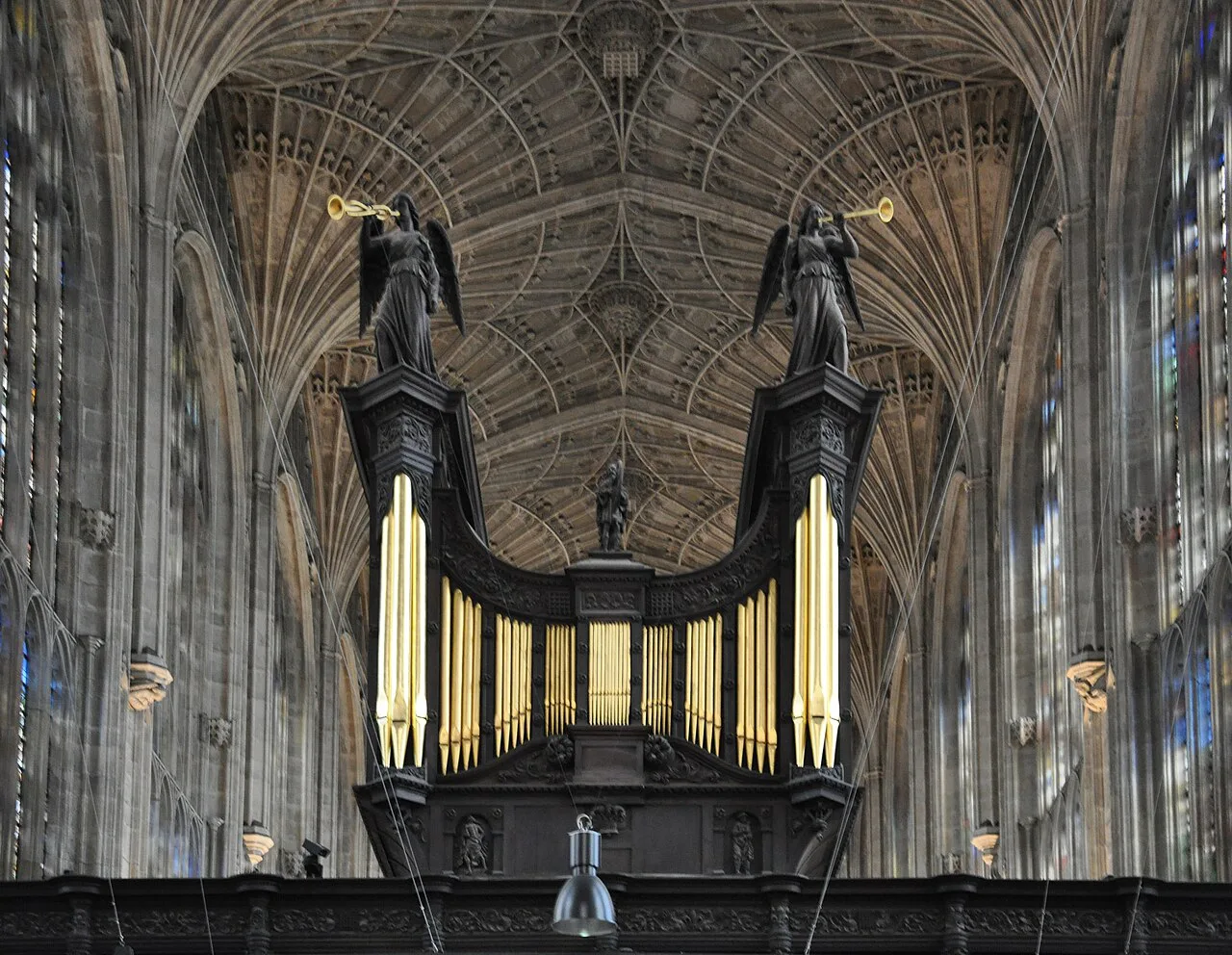
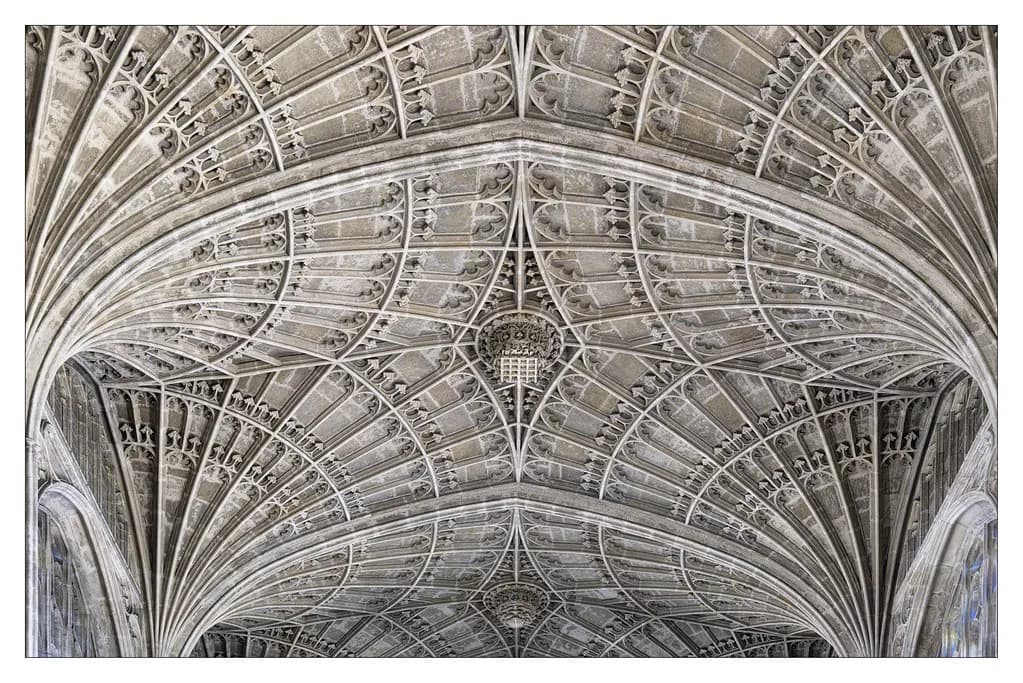
The colleges are the visible layers of Cambridge history. King's College Chapel is the most instantly recognisable building in the city and plays a central role in college life, so it is the one interior worth planning a day around.
The Bridge of Sighs, part of St John's College, is a Gothic Revival structure with little in common with its Venetian namesake and is best admired from the water. The Mathematical Bridge at Queen's College is the opposite case: a genuine architectural feat built from straight timber pieces, wrapped in a story that no screws, bolts or nails were used, which is a local legend rather than fact. Take a punt if you want to see both properly from the river.
The Reformation and after: Great St. Mary's and the university church
Great St. Mary's is the university church, and its tower is the best physical measure of how the city is laid out. Climbing the 123 steps to the outdoor viewing platform gives you a 360-degree view over the colleges, which makes the medieval street plan much easier to read than any map.
Use the tower view to place the Reformation-era buildings against the river and the market. Once you can see how tightly the colleges sit around the centre, the later history — the scientific institutions, the museums, the twentieth-century expansion — makes more sense as an outward spread from a compact core.
Science and discovery: the Eagle, DNA and the Corpus Clock
The Eagle pub in the city centre is where Francis Crick and James Watson announced the discovery of DNA in 1953, which makes it a legitimate stop on a science-history walk rather than just a good pub. Treat the claim as the documented story it is and enjoy the building on its own terms.
The Corpus Clock is the modern counterpart: a golden, grasshopper-like creature called the Chronophage appears to eat time, and there are no hands — you read the hour, minute and second from three rings of LEDs. It is free to look at from the street and takes a couple of minutes, so pair it with a walk along King's Parade rather than making a trip of it.
The twentieth century: cycling, Parker's Piece and the tech cluster
Cambridge calls itself the UK's cycling capital, with around 55 per cent of residents making a journey by bike at least once a week. That is not trivia: it shapes how you should move around, and hiring a bike is often quicker than anything with an engine in the centre.
Parker's Piece is where students set about formalising the rules of football in 1863, producing the Cambridge Rules that informed the Football Association's codes, and a sculpture on the green today carries the original rules carved into granite in different languages. Between spring and autumn you may also meet cattle grazing on the city's commons, a centuries-old tradition that surprises visitors.
The modern city is Europe's largest technology cluster, with around 5,000 science and tech companies generating more than £15.5 billion in annual revenue between them.
Museums that explain the city's past
Three museums do the heavy lifting for context. The Museum of Archaeology and Anthropology covers humanity's history over hundreds of thousands of years, world cultures over recent centuries and Indigenous life and art today, while the Sedgwick Museum of Earth Sciences takes you on a 4.5 billion year journey through time. Both are listed as free, which makes them the obvious choice when you want substance without a ticket decision.
The Museum of Zoology holds a 21-metre fin whale skeleton that fills the entrance hall end to end, one of the largest of its kind recorded. For the university's art and antiquities, the Fitzwilliam Museum is the lead partner of the University of Cambridge Museums and Botanic Garden collections and is listed as free.
If your interest is pictures rather than pots, the city's art collections are worth a separate half-day, and the Fitzwilliam is the natural starting point for that too.
A walking route that follows the timeline
Start at Magdalene Bridge for the medieval crossing and the Grantabridge name, then walk south through the centre to the Leper Chapel if you want the 12th-century survival, though it sits out on Newmarket Road rather than in the historic core. From the centre, take in Great St. Mary's tower for the layout, King's College Chapel and King's Parade for the college era, and finish at the Corpus Clock and the Eagle for the scientific chapter.
Add a punt in the afternoon to see the Bridge of Sighs and the Mathematical Bridge from the water, which is how both are meant to be viewed. Plan the museums for a wet morning and the walking for a dry one, since the outdoor stops are the ones you cannot compress.
Legends and stories: Byron's bear, Cromwell's head and the bridge myth
Some of Cambridge's best stories are legends, and they are more enjoyable told that way. Lord Byron is said to have kept a bear while a student at Trinity College in the 1800s, bought from Stourbridge Fair, which was the largest medieval fair in Europe at its peak.
Oliver Cromwell was laid to rest at Westminster Abbey, but his decapitated head is said to be buried in the grounds of Sidney Sussex College. The Mathematical Bridge's fixings-free reputation is likewise a local legend. If you like your history with a darker edge, the city's ghost tours and haunted places run on exactly this appetite for a good story.
Practicalities: time, tickets and booking ahead
Give the historic core a full day on foot and a second day for museums. Check opening days and any admission requirements for individual colleges, chapels and churches before you travel, since these are working institutions rather than attractions with uniform hours.
Punting operators run guided tours and self-hire from Mill Lane and Quayside, and private guided tours of the university and colleges can be arranged for groups from one person upwards. Booking ahead matters most in summer and around May Week, which actually falls in early June and fills the calendar with balls and garden parties.
Plan Your History-Focused City Break
Base yourself in the centre and the timeline becomes a walk: the bridge and the medieval chapel, the 1209 university, the college chapels and bridges, the church tower, then the pubs and clocks of the scientific era. Mix in the free museums on a wet day and you have covered eight centuries without a single taxi.
Cambridge Castle is long gone, so if walls and keeps are the point of your trip, look beyond the city, and compare that with the history of Liverpool if you want a contrast.
Explore more Cambridge guides
Frequently Asked Questions
How long has Cambridge University existed?
The University of Cambridge was founded in 1209 by scholars who left Oxford, which makes it the world's fourth-oldest surviving university. It marked its 800th anniversary in 2009, so the institution has been teaching continuously for more than eight centuries.
What was Cambridge called before, and how did it get its name?
In the Middle Ages the town was known as Grantabridge, meaning the bridge over the river Granta, one of the sources of the River Cam. The name records the original reason for a settlement here: a crossing point on the river.
What is the oldest building in Cambridge?
The Leper Chapel on Newmarket Road, also called the Chapel of St Mary Magdalene, is one of the oldest surviving buildings in the city and dates from the 12th century. It was originally used to isolate victims of leprosy and sits outside the historic core, so plan it as a separate stop.
Was Harry Potter filmed in Cambridge?
The city has appeared on screen in productions such as Chariots of Fire, The Theory of Everything and Grantchester. Whether a particular scene comes from Cambridge is worth confirming with the location rather than assuming.
Which museums should I visit to understand Cambridge's history?
The Museum of Archaeology and Anthropology, the Sedgwick Museum of Earth Sciences, the Museum of Zoology and the Fitzwilliam Museum all hold collections that span the city's story. Several are listed as free, which makes them an easy addition to a walking day.
Do I need to book college entry or punting in advance?
Colleges, chapels and churches are working institutions, so admission arrangements vary by site and are best confirmed with each one before you travel. Punting operators run guided tours and self-hire from Mill Lane and Quayside, and booking ahead matters most in summer and around May Week in early June.
Sources
Notes for your next city break
Optional updates to our UK city guides.
You might also like
Continue reading
More guides you'll find useful