History of Canterbury: A Walk Through the City's Past
A plain-English history of Canterbury, from Roman town to pilgrimage city, with the cathedral, abbey and city walls you can still see and how to visit them.
On this page
Canterbury is a small walled city in Kent whose historic core holds a Roman town, the cradle of English Christianity and one of Europe's great pilgrimage sites within a few minutes' walk of each other. Canterbury Cathedral, St Augustine's Abbey and St Martin's Church together form a UNESCO World Heritage Site linked to the arrival of Christianity among the Anglo-Saxon kingdoms. You can see the headline sights in a day, but the story makes more sense if you walk it in order.
What Canterbury is: a walled city in east Kent
Canterbury sits on the River Stour in east Kent, roughly an hour from London by high-speed train and within reach of the Kent coast. The city retains its medieval wall line, and the old centre is compact enough to cross on foot, which is why a single day can cover the cathedral precincts, the abbey ruins and the main shopping streets without a bus. The tourist board describes it as a walled medieval city built around its UNESCO World Heritage Sites.
Three separate properties make up the World Heritage Site: the cathedral, the ruined abbey of St Augustine and the small church of St Martin. They are not clustered in one spot, so plan the abbey and St Martin's as a short walk north-east of the cathedral rather than tacking them onto a cathedral visit at the last minute.
Before the Romans: settlement by the River Stour
Before any Roman road or cathedral, the Stour valley attracted Iron Age settlement, with Belgic tribes established in large round houses near the river. That detail matters for the walk because the river is still the reason the city sits where it does, and the later Roman and medieval street pattern grew from that earlier settlement. The same river-first logic runs through the history of Liverpool, where the Mersey shaped the town from its earliest days.
Roman Canterbury: a town, a theatre and a house under Butchery Lane
The Romans arrived in Britain in 55 BC and Canterbury grew into a substantial town; by the early third century it had one of the largest theatres in Britain. Roman baths stood on the site of the present Marlowe Arcade, an open forum lay beneath the High Street, and a large theatre occupied the southern end of St Margaret's Street.
Much of this was only uncovered in the twentieth century, when excavation after the Second World War revealed a large Roman townhouse on Butchery Lane. The Canterbury Roman Museum was built around those remains and displays a mosaic floor from the house along with two rare cavalrymen's swords, pottery, lamps, jewellery and painted wall plaster. For anyone tracing the city's deep history, this is the place to start before the medieval sights.
The medieval walls you see today were built on Roman foundations, so a circuit of the walls is really a walk along two layers of the city's past. If Roman and medieval building fabric is your interest, it is worth reading up on the city's architecture before you arrive so you know what you are looking at in the street.
St Martin's Church and Queen Bertha
Christianity in Canterbury predates Augustine. Bertha, a Frankish princess and daughter of Charibert, King of Paris, married the pagan King Aethelbert of Kent around 567, and as part of the marriage settlement she was allowed to keep her Christian faith. Aethelbert renovated an old Roman church just outside the city for her use, and that church is St Martin's.
Bertha's influence was not decorative. She was instrumental in Aethelbert's conversion, making him the first Anglo-Saxon king to become Christian, and in the founding of monastic settlements at Canterbury. Her contribution is recognised inside the cathedral with a statue and a stained-glass window, so the building you visit today carries the memory of a queen who never saw the Norman structure.
Augustine's mission and the abbey outside the walls
The better-known turning point came in 597, when Augustine arrived as a missionary and established his base at Canterbury, which is why the archbishopric sits here rather than in London or York. The abbey of St Augustine grew up outside the city walls as a royal and monastic foundation, and its ruins now form the second element of the World Heritage Site. A list of freely available resources covering a thousand years of Canterbury and Kent history, from 597 to 1597, shows how much of the early record survives in archives and printed editions.
The abbey is a ruin rather than a roofed building, so allow time to read the site rather than expecting furnished rooms. It also sits slightly away from the cathedral, which makes it the natural first or last stop on a history walk rather than a mid-morning detour.
Canterbury Cathedral from the 11th century
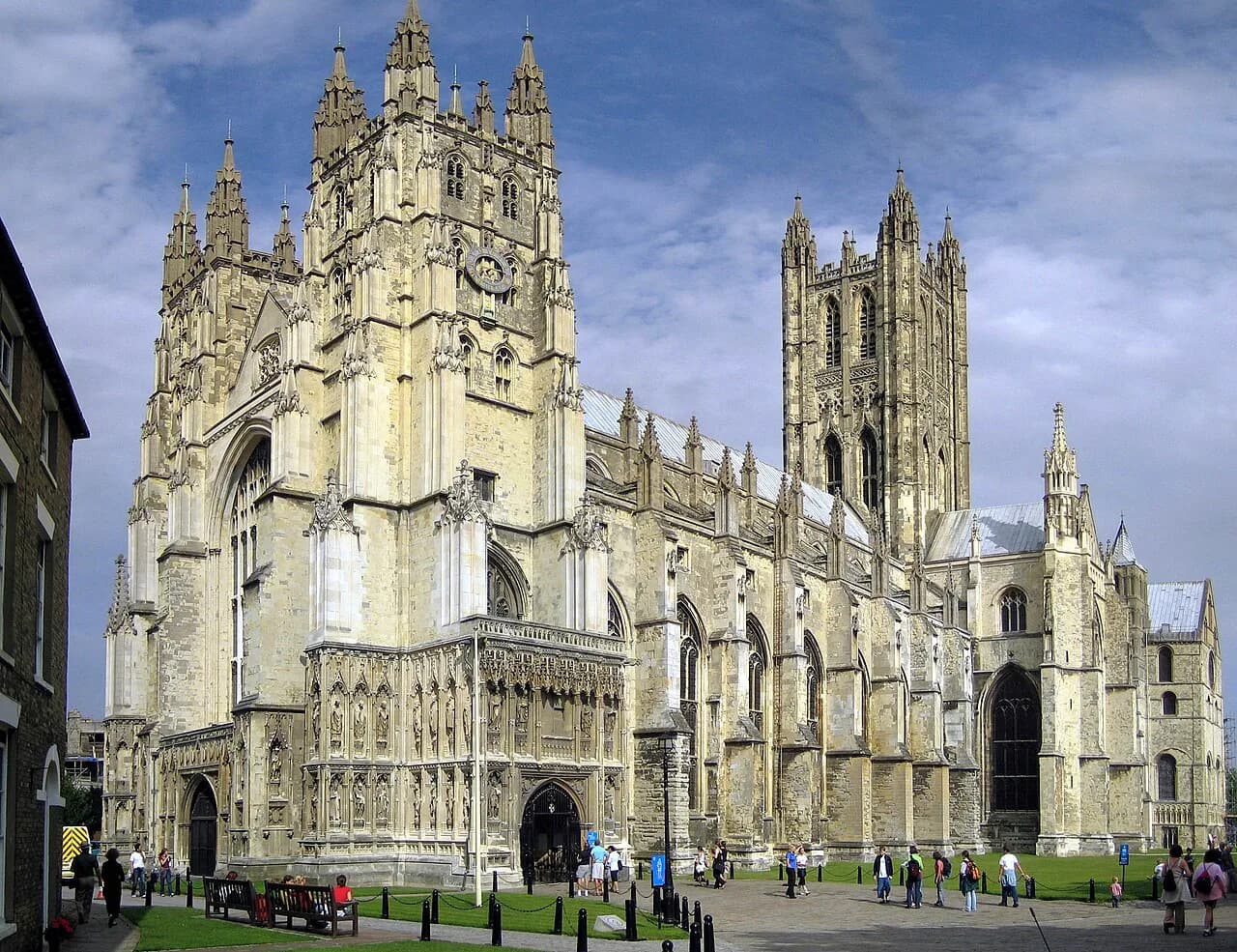
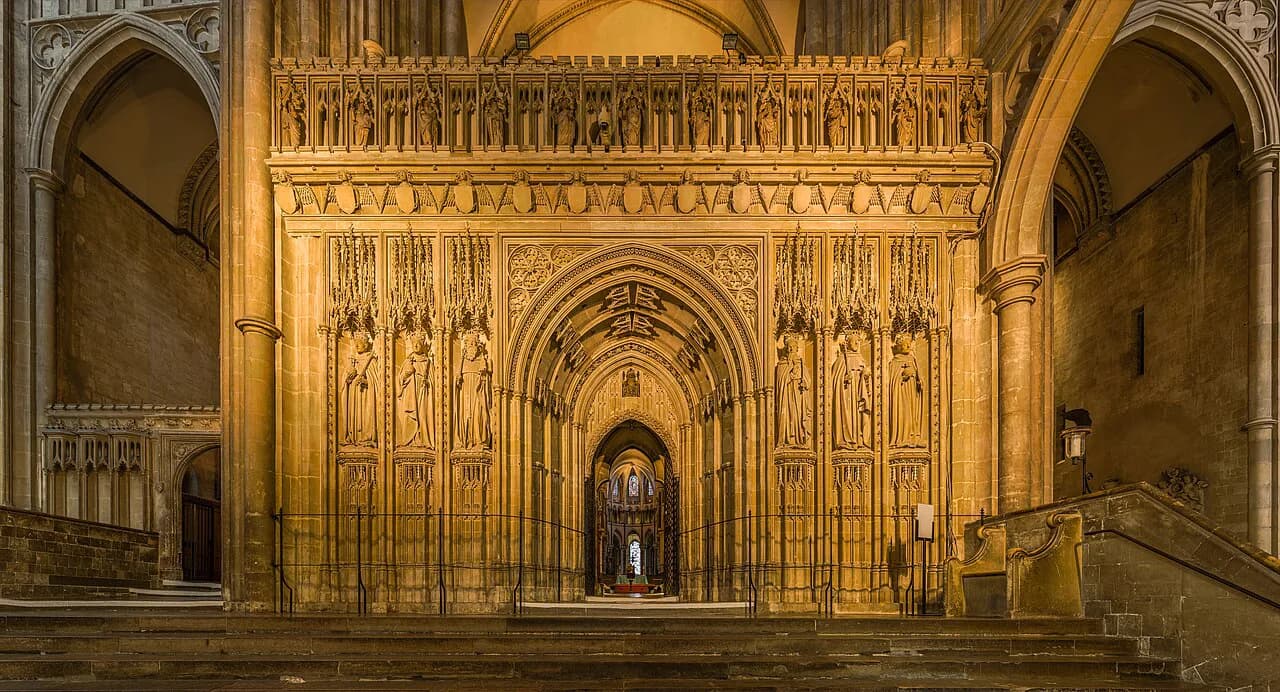
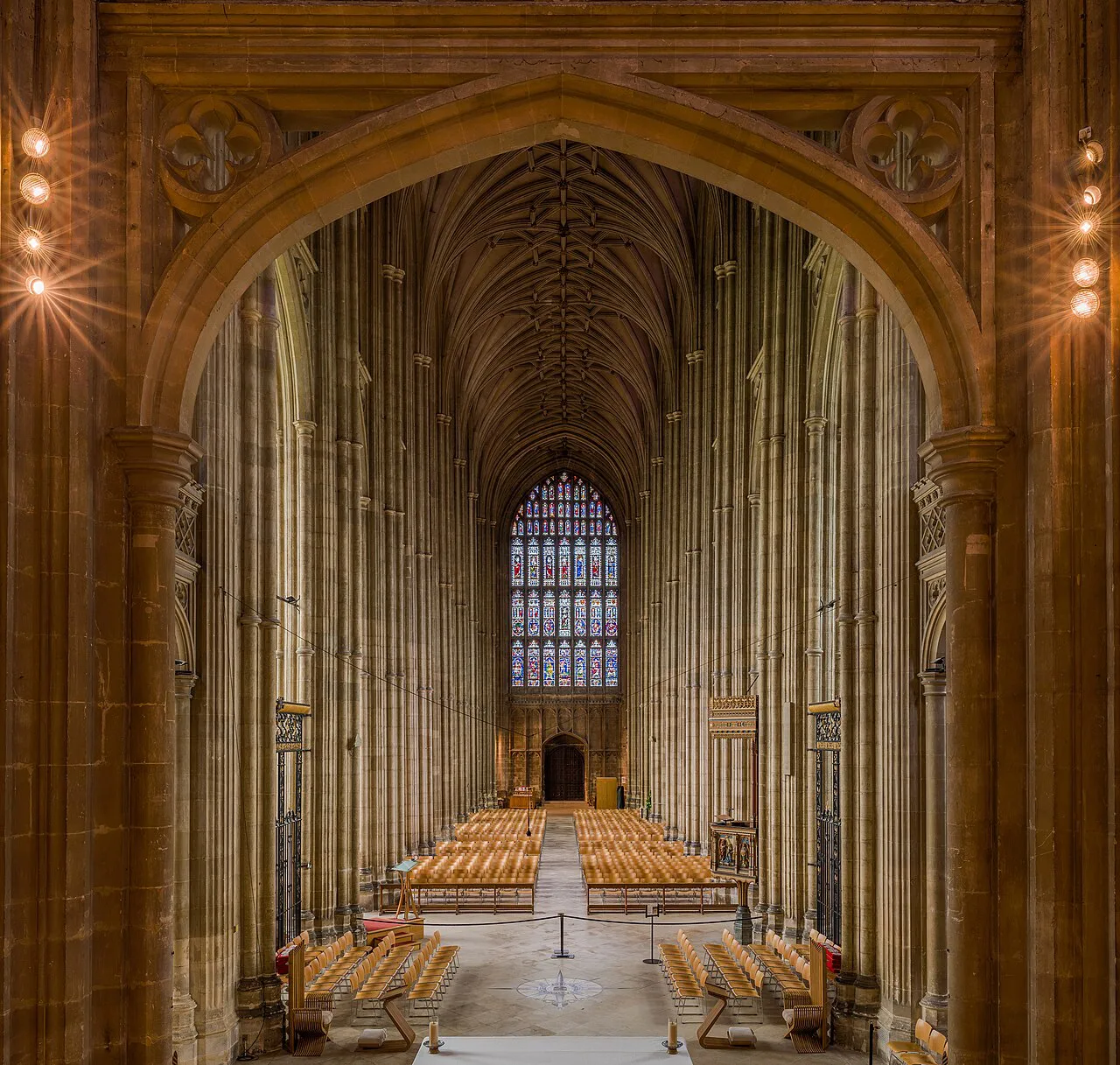
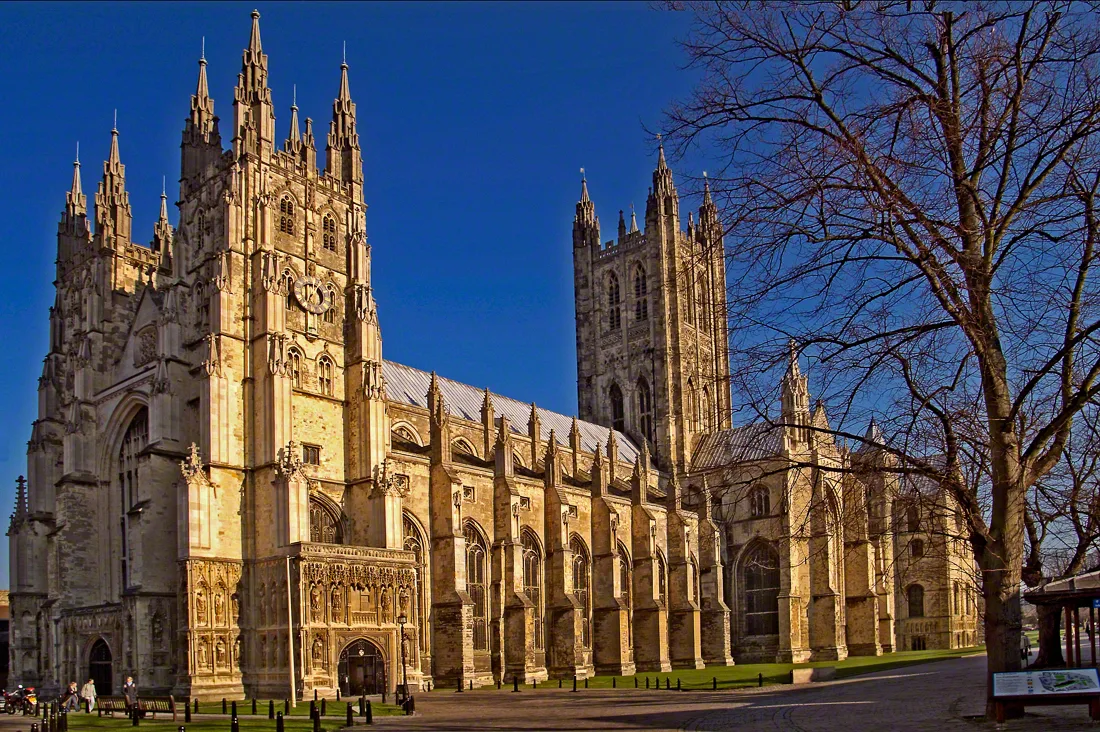
The cathedral you see today is largely a Norman and later medieval building, with sections dating to the eleventh century and a fabric that mixes Romanesque mass with later Anglo-Gothic height and light. It has been the setting for national events, including the planning of Magna Carta, long before it became a visitor attraction. Allow at least a couple of hours if you want the nave, the crypt and the site of the martyrdom rather than a quick look through the door.
Its slow construction, destruction and rebuilding are documented in medieval chronicles and antiquarian studies, including accounts of the fire that damaged the church and the repairs that followed. That records trail explains why architectural historians still argue over which parts of the standing building are earliest, and why the cathedral rewards a little preparation.
For the full picture of the city's medieval churches, hospitals and monastic houses, the cathedral is only the grandest survivor rather than the whole story. Pair it with a look at what else the city's collections hold, and the picture of medieval Canterbury fills in.
1170: the murder of Thomas Becket
In 1170 Archbishop Thomas Becket was killed in the cathedral by knights acting after Henry II's outburst against him. The spot is marked by four swords, representing the four knights, and the cathedral keeps the memory of his last words as a statement of defiance: that for the name of Jesus and the protection of the Church he was ready to embrace death.
After the murder the monks moved Becket's body several times within the crypt, and two of them, William and Benedict, recorded 703 miracles attributed to the tomb while the body lay there. Pope Alexander III proclaimed Becket a saint on 21 February 1173, which turned Canterbury into one of the great pilgrimage destinations of Europe.
Becket's cult generated a huge documentary and material record, much of which is catalogued and partly digitised; the British Museum holds numbers of pilgrim badges, and the Museum of London collection includes more than 240 of them. If you want to see how ordinary pilgrims marked their journey, these small metal souvenirs are the most direct evidence.
Pilgrimage and Chaucer's pilgrims
Geoffrey Chaucer's Canterbury Tales, a collection of 24 stories in Middle English verse, follows a group of pilgrims travelling from London to Becket's shrine, and it fixed the pilgrimage in the English imagination even for readers who never make the journey. The poem is not a guidebook, but it is a useful reminder that the road to Canterbury was once a busy tourist route in its own right.
One later tale, the Interlude and Tale of Beryn, describes Chaucer's pilgrims arriving in Canterbury and may have been written by a Canterbury monk in time for the 1420 jubilee. The city's archives keep related material, including a 1428 customary that set out how Becket's shrine was to be run, now available in an open-access edition.
Cinema and television have made pilgrimage into something more solemn than the medieval reality, which was a mix of devotion, commerce and holiday. A ghost tour of the city in the evening is a modern descendant of that appetite for stories, and legend should be enjoyed as legend rather than taken for record.
1538 and the Dissolution
Becket's shrine did not survive the Reformation. In 1538 Henry VIII had the chapel destroyed, and according to tradition Becket's bones were put on trial, found guilty of treason, burnt and fired from a cannon so that no further veneration could take place. No official record confirms that sequence of events; the remains may simply have been thrown away or reinterred in an unmarked grave.
The Dissolution also ended the abbey outside the walls and dispersed its community, which is why St Augustine's is now a ruin rather than a working monastery. This is exactly where legend and record part company: the story that monks swapped Becket's bones for those of another man and kept the saint's remains hidden is a story, repeated inside the cathedral but not documented, and several locations in the building have been suggested as a resting place.
The medieval city: walls and the Westgate Towers
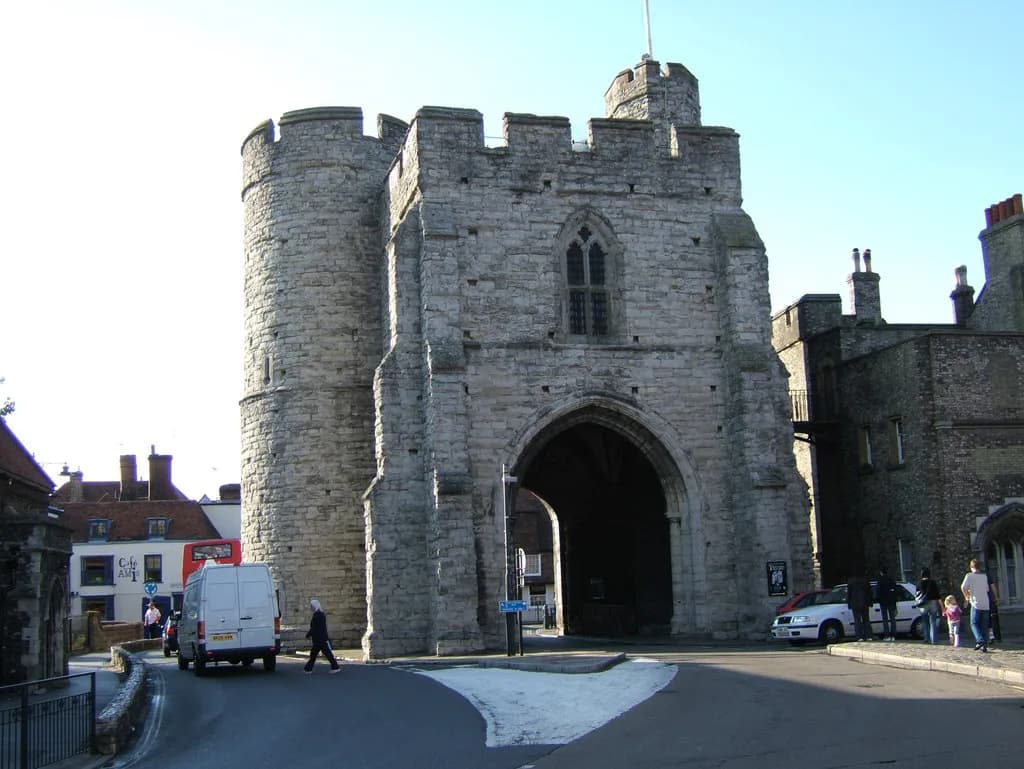
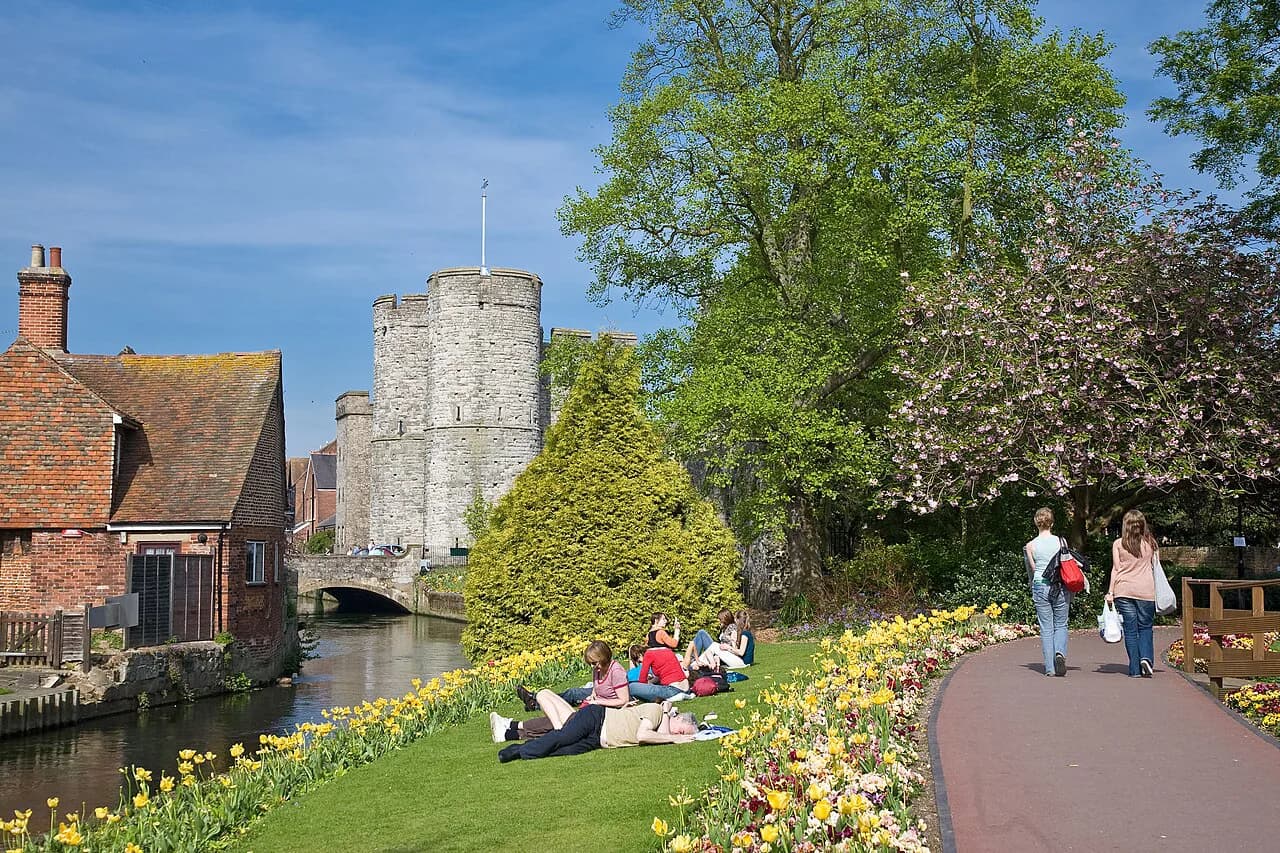
Canterbury's walls were built in the Middle Ages on Roman foundations, and the surviving gates give a clear sense of how tightly the city was enclosed. The Westgate Towers is described as England's largest surviving medieval gateway, with views over the city centre, and it sits beside the Westgate Gardens and the river, where you can walk or take a punt.
For anyone interested in fortification, the gate is a modest but genuinely medieval survivor rather than a reconstruction, and it fits naturally into a walk between the cathedral and the river. If you have time for a wider excursion, there are other castles near Canterbury that show the defensive architecture of the region.
The Franciscan Gardens mark the first Franciscan settlement in Britain, and the Greyfriars Chapel is the only surviving building of the first English Franciscan friary. Dane John Gardens offers a pause by the fountains, so a wall-and-gardens loop works well as an afternoon after a cathedral morning.
Dickens and literary Canterbury
Canterbury appears throughout Charles Dickens's David Copperfield, with 17 sites in the novel associated with the city, including the Sun Inn and Buttermarket Square. Dickens visited often and stayed at The Sun Hotel by the cathedral gates, using it in the novel as the model for Mr Micawber's inn; the building was originally a pilgrims' hostel built in 1437-38 by Christ Church Priory.
Most of these literary sites sit in the old streets around the cathedral, so a Dickens walk is really a walk through the medieval core with a different set of labels. Read the relevant chapters before you come and the plaques and building fronts will mean more.
The Second World War and the fire watchers
Canterbury lay on the route of German bombers heading for London, and after the RAF raid on Cologne in 1942 the Luftwaffe targeted culturally important British cities in the Baedeker raids. On the night of 31 October 1942 the city was badly damaged, with many casualties, and although the cathedral was not hit directly by a high-explosive bomb, its library and archives were destroyed.
Civilian fire watchers spent every night on the cathedral roof during the war, putting out incendiaries with water or sand or throwing them clear. A memorial stone in the nave floor records them, and it is easy to walk over it without noticing, so look for it on your way towards the crossing.
What survives to see today
The cathedral, the abbey ruins, St Martin's Church and the Roman Museum are the four essential stops, covering the Norman and medieval church, the monastic city and the Roman town beneath your feet. The Westgate Towers, the wall circuit, the Franciscan Gardens and Dane John Gardens add the civic and defensive story.
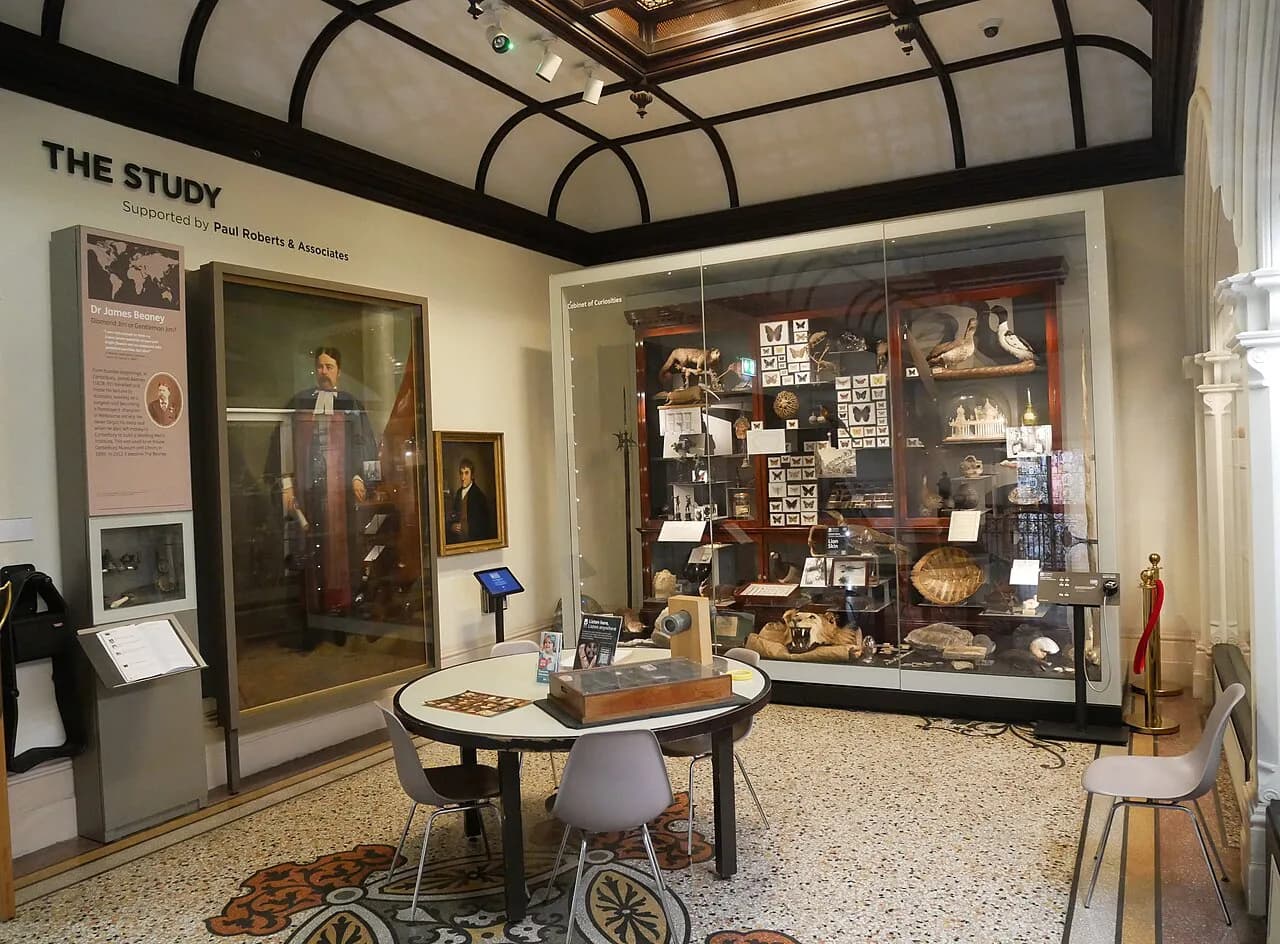
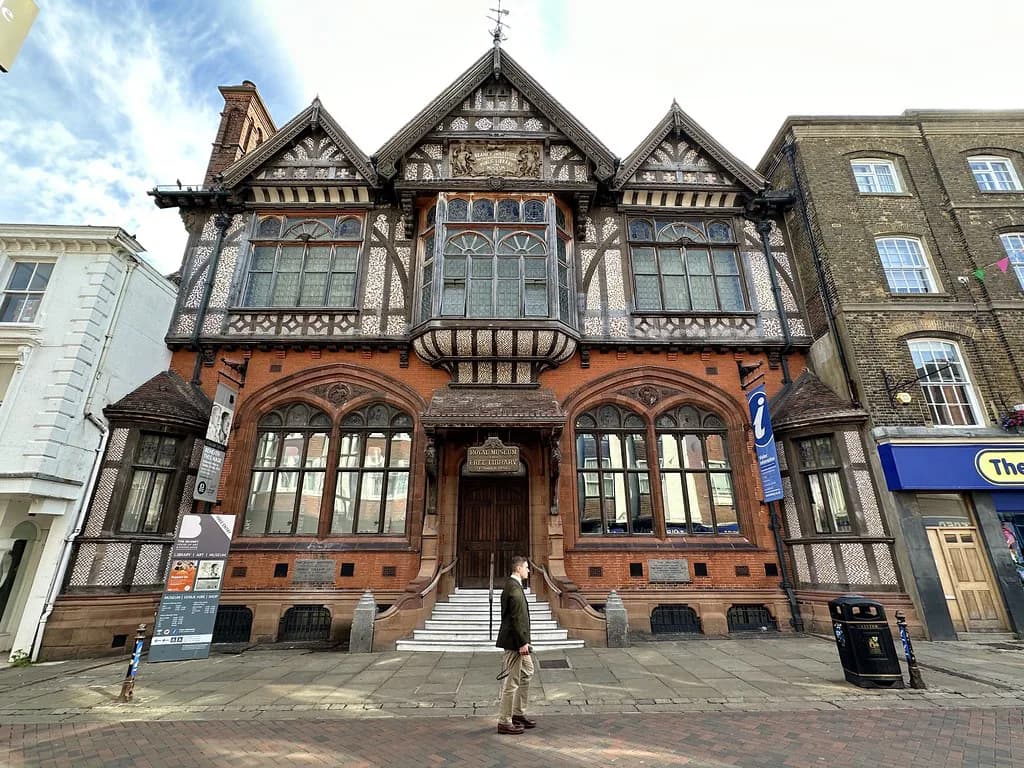
If you want the broader list of collections before deciding what to pay for, one page sets out the main museums and what each is best for. The Beaney House of Art & Knowledge on High Street doubles as gallery, exhibition space, library and the city's visitor information centre, and it is the sensible first stop for maps and current opening arrangements.
The Beaney also has displays worth a look in their own right, and it sits on the same street as many of the historic sites, so it costs little to start there.
Contradictions between history and legend
The biggest unresolved question is what happened to Becket's physical remains after 1538, and the honest answer is that the precise fate is unknown. The story of the monks' substitution is repeated locally as a possibility, not as established fact, and the cathedral itself contains more than one location offered as a candidate.
Other stories, including later ghost tales attached to the cathedral precincts, are legends with no documentary backing and should be treated as entertainment. Medieval miracle lists are historical documents, but they record what pilgrims believed, and they are evidence of devotion rather than medical record.
How long to allow and in what order to walk the historic core
Give Canterbury a full day if history is the point of the trip, and two if you want the Roman Museum and a wall walk without rushing. Start at The Beaney visitor information centre on High Street for maps and current arrangements, then walk to the cathedral for the morning, keeping the crypt and the martyrdom site for unhurried time rather than the last twenty minutes.
In the afternoon, head north-east to St Augustine's Abbey ruins and St Martin's Church, the two quieter World Heritage components, before returning through the city via the Westgate Towers and the river gardens. If Roman Canterbury interests you more than the medieval city, reverse the order and take the Roman Museum first, when your attention is freshest.
For an evening, the city's stories-supper tradition lives on in the ghost walks that leave from the centre, and they suit a short break better than a serious history itinerary.
If you are extending the trip, the wider county holds abbeys, castles and historic houses that need their own days, and the Canterbury attractions guides are the place to start matching them to your interests.
Plan Your Visit
Canterbury's history is unusually legible because the Roman town, the medieval city and the pilgrimage story occupy the same few streets. Walk it in chronological order if you can, and give the abbey and St Martin's Church real time rather than treating them as an afterthought to the cathedral.
Ticket prices, opening days and any seasonal closures for the cathedral, the Roman Museum and the abbey change through the year, so confirm arrangements with each venue or at the visitor information centre before you travel. Booking the cathedral ahead in busy periods is the single most useful step for a smooth day.
Explore more Canterbury guides
Frequently Asked Questions
What are the most significant historic sites in Canterbury?
Canterbury Cathedral, the ruins of St Augustine's Abbey and St Martin's Church together form a UNESCO World Heritage Site linked to the arrival of Christianity among the Anglo-Saxon kingdoms. The Canterbury Roman Museum adds the Roman town underneath the modern streets, and the Westgate Towers and city walls show the medieval defences.
What is the oldest part of Canterbury Cathedral?
The building is largely Norman and later medieval, with sections dating to the eleventh century. The cathedral's fabric mixes Romanesque mass with later Anglo-Gothic work, and architectural historians still debate the exact sequence of construction and rebuilding.
Did the Romans call Canterbury something else?
Canterbury began as an Iron Age settlement near the River Stour before the Roman arrival, and grew into a substantial Roman town with a theatre, baths and a forum. The Roman Museum on Butchery Lane displays a mosaic floor and finds from the town that stood on the site.
Where is Thomas Becket's body?
Becket was murdered in the cathedral in 1170 and canonised in 1173, and his shrine became one of Europe's great pilgrimage destinations. After Henry VIII ordered the chapel destroyed in 1538, the fate of the bones is unknown: the story that monks substituted another body is a legend rather than a documented fact.
Why is Canterbury associated with Chaucer?
Geoffrey Chaucer's Canterbury Tales follows a group of pilgrims travelling from London to Becket's shrine, in a collection of 24 stories in Middle English verse. The poem fixed the pilgrimage in the English imagination and remains the best-known literary link to the city.
Can you visit the Roman remains in Canterbury?
Yes. The Canterbury Roman Museum was built around the remains of a large Roman townhouse excavated after the Second World War, and it displays a mosaic floor from the house along with cavalrymen's swords, pottery, lamps and painted wall plaster. Check opening days and admission with the museum before you go.
Sources
Notes for your next city break
Optional updates to our UK city guides.
You might also like
Continue reading
More guides you'll find useful