History of York: Which Historic Sites to See First
A practical timeline of York's history, from Roman Eboracum and Viking Jorvik to the Minster and city walls, with the surviving sites to see at each stage.
On this page
York's history stacks up in a single walkable centre: a Roman fortress, an Anglian and Viking power base, a medieval cathedral city, then a Victorian railway town. Each layer left something you can still look at, which makes the city unusually easy to read on foot. The timeline below follows that order and pairs every stage with the surviving site that carries it.
The place rewards anyone willing to look past the postcard view of the Minster. A single stone tower, a stretch of wall with musket loops, or a guildhall door can each open up a century, so plan around fragments as much as around headline buildings.
Roman York: Eboracum and Constantine
The Romans called the city Eboracum, and it served as capital of Britannia Inferior, the northern province of Roman Britain. Emperors lived, governed and died here, and the site of York Minster stands where Constantine the Great was proclaimed emperor. That single event in York fed into the spread of Christianity across the Roman Empire.
The Minster's Undercroft reveals the Roman basilica beneath the cathedral floor, along with signs of the earlier churches that stood on the site before the present building. Treat it as the starting point of any chronological visit: you descend through the layers rather than reading about them.
Anglian York and the Conversion of 627
After the Roman army withdrew around 410, Anglian settlers from northern Germany took over the region, and York became a royal and ecclesiastical centre again. In 627 the Northumbrian king Edwin was baptised in an early version of York Minster, a wooden church built for the occasion, and the wider conversion of the Anglo-Saxon kingdoms followed.
The Anglian Tower, tucked between the Yorkshire Museum Gardens and the King's Manor, is the only secular stone building surviving from Anglo-Saxon England. It sits close to the ruins of St Mary's Abbey and within easy reach of the Minster, so it slots neatly into a short walking route. For the practical details, see the castles near York.
Viking York: Jorvik and the Coppergate Finds
A Viking army took York in 866, and the city became the capital of the largest Viking kingdom in Britain under rulers including Eric Bloodaxe. The Norse name Jorvik replaced the Anglian Eoforwic and survives in the modern city's name.
The Coppergate excavation produced the finds that anchor Viking York for visitors, and the Jorvik Viking Centre houses them alongside a ride through a reconstruction of 10th-century streets. The everyday objects are the real draw: a single woollen sock and a repaired frying pan say more about daily life than the weaponry does.
The Norman Arrival and the Massacre of 1190
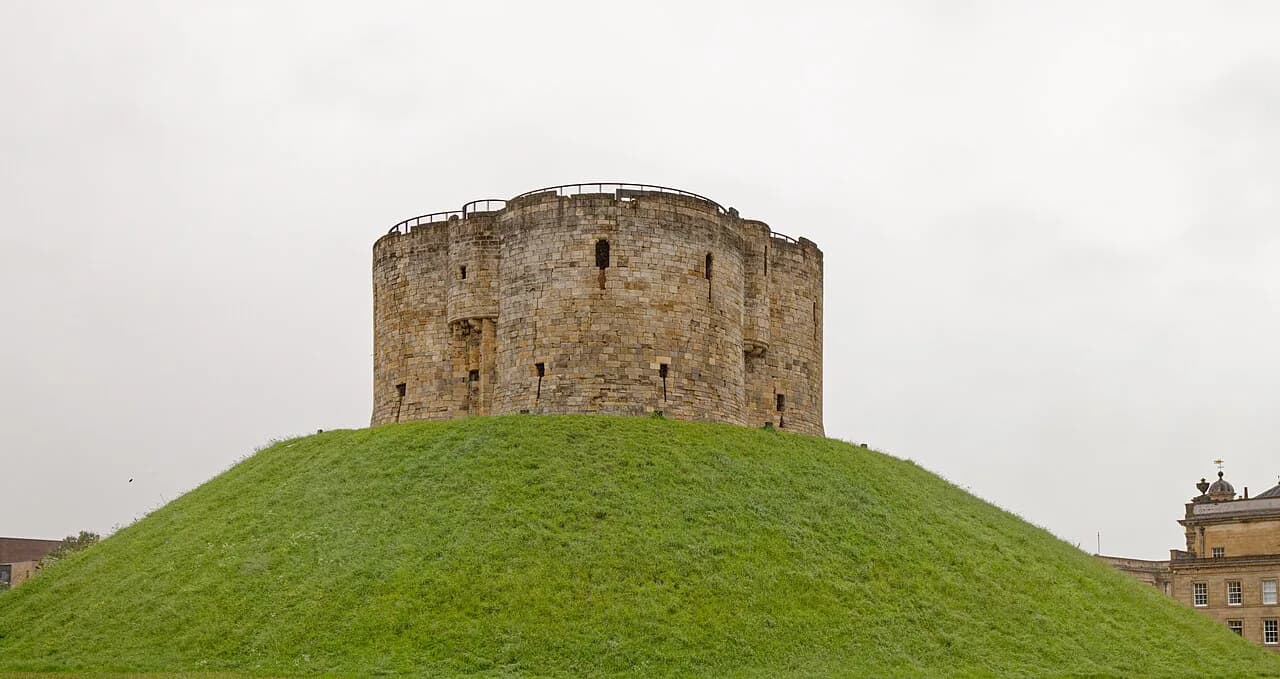
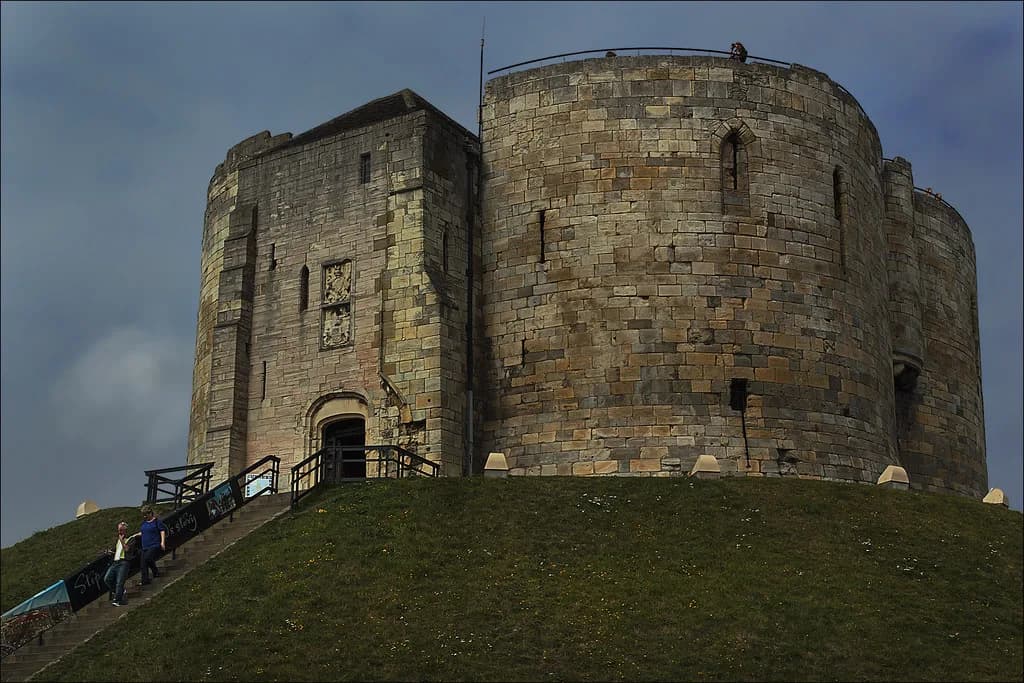
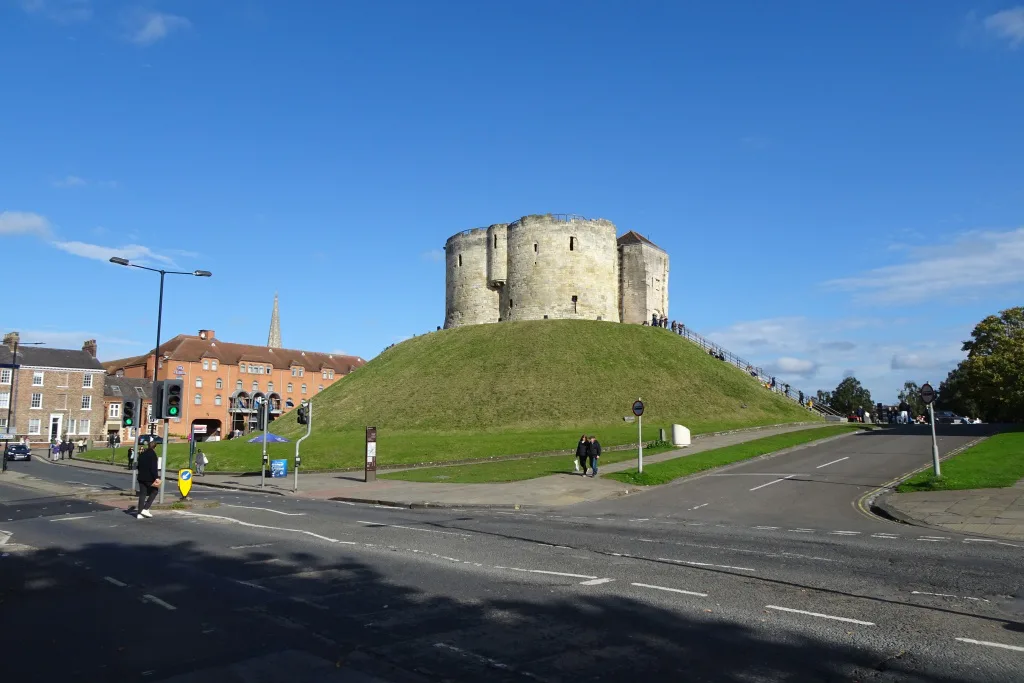
William the Conqueror made York his northern capital and built two castles here, and the city rebelled against him. His retaliation, the Harrying of the North, devastated the region. Clifford's Tower is the most visible remnant of that Norman castle, a stone keep raised by Henry III in the 13th century after the original wooden structure burned.
In 1190 anti-Semitic riots drove York's Jewish community into the castle, where around 150 people died after the keep was set alight. The stone tower that stands today was built afterwards. Visitors should approach the site as a place of commemoration as well as defence, and treat it plainly rather than as spectacle.
Medieval York: The Minster's Gothic Rebuild
The present York Minster took shape over more than two centuries. Builders wrapped a Gothic outer skin around the Norman church, then demolished the older inner walls, and the cathedral was declared finished in 1472. The chapter house is the oldest surviving part of the present building.
The Minster holds the greatest single collection of medieval stained glass in the world, and the Great East Window is its centrepiece, designed and executed by John Thornton. Its panels run from the Creation to the Apocalypse, with historical figures including Bishop Skirlaw along the base.
Nearby, the ruins of St Mary's Abbey in the Yorkshire Museum Gardens recall one of the wealthiest Benedictine monasteries in England, founded in 1088 and dissolved under Henry VIII. The King's Manor next door began as the abbot's house in 1270 and later hosted the Council of the North. For the practical details, see the things to do in York.
Guilds, the Mystery Plays and the Merchant Adventurers' Hall
At their height in 1415, York had 96 trade guilds, and joining one was the price of doing business in the city. Guilds set wages, settled disputes and cared for members' families, and seven still remain. The Merchant Adventurers' Hall is the grandest survivor, unusual for keeping its chapel through the Reformation.
Once a year the guilds staged the York Mystery Plays, a cycle of 48 biblical scenes performed on wagons around the city. Each guild took charge of its own scene, which meant spectators saw the story out of order. The plays were suppressed by 1569, and later revivals have recreated them, most recently in 2022.
The Walls and the Siege of 1644
York's walls survive where most English city walls do not, and much of the circuit sits on Roman foundations with medieval defences above. The Victorians restored heavily, occasionally inventing details such as the Robin Hood Tower. You can walk the full circuit to trace the outline of the old city.
During the Civil War the city held for the Crown, and Cromwell's Parliamentarians besieged it from 16 July 1644. Musket holes and modified firing loops can still be read in the stonework, and the walls were repaired once Parliament took the city. The stretch between the River Foss and Clifford's Tower shows where the castle's water defences once ran.
Georgian and Victorian York: Railways and Chocolate
York's second act came with the railways. George Hudson, the Railway King, brought the railways to the city, placing it midway between London and Edinburgh at the centre of industrial Britain. Birmingham tells a parallel story of a city remade by industry, traced in this history of Birmingham with its own surviving landmarks.
Confectionery made the city famous too, to the point that it was known as the chocolate city, and the trade shaped its Victorian economy. The railway story is told in the National Railway Museum, while the castle prison buildings now form the York Castle Museum, one of the museums in York that covers social history.
Tracing the Timeline on the Ground
A single day covers the core sequence comfortably: the Minster and its Undercroft, the Anglian Tower and St Mary's Abbey in the museum gardens, Clifford's Tower and a stretch of wall. Add the Jorvik Viking Centre and the Merchant Adventurers' Hall for the Viking and guild chapters.
Two days let you slow down. Use the second for the walls circuit, the castle museums and the railway collections, and consider a guided walk if you want the fragments pointed out. A walking tour is the quickest way to connect the Anglian Tower, the guildhall and the siege damage into one story.
Steps and stairs shape the day more than distances do. Tower climbs and wall staircases demand decent footwear and a head for heights, and the Minster, Clifford's Tower and the Jorvik Viking Centre all draw queues at busy times, so book ahead where a site allows it and check opening days directly with each venue.
Where the City's Art and Architecture Fit
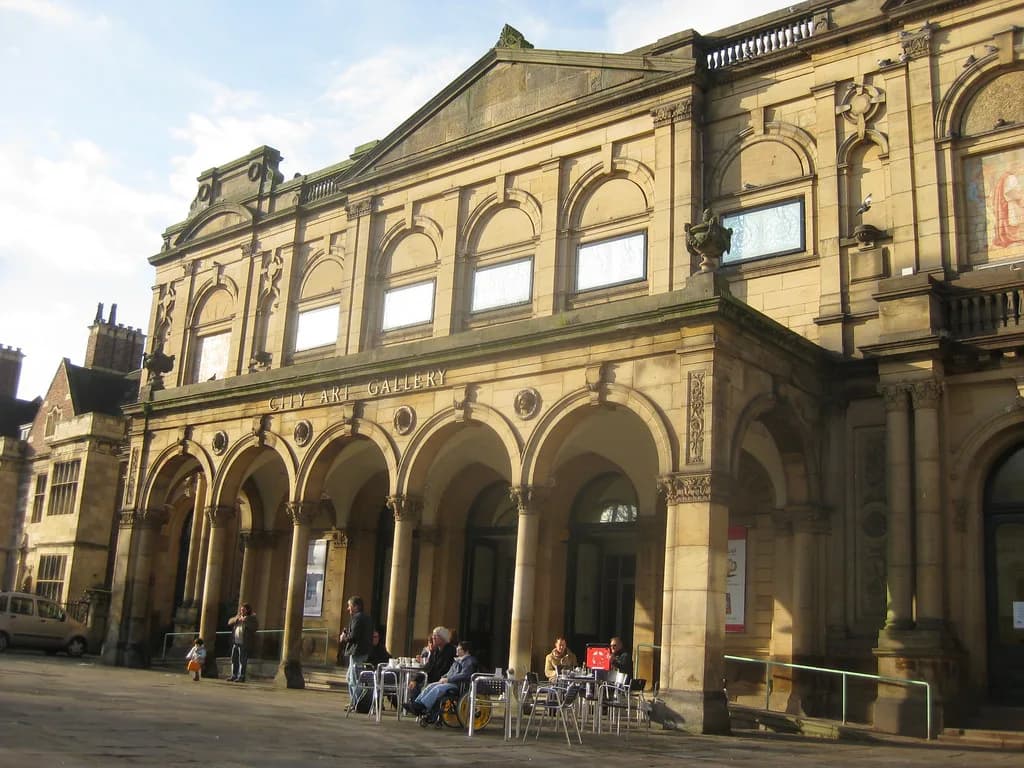
York's visual record runs from the Minster's glass to the city's later galleries. The York Art Gallery holds work by Mark Hearld and Grayson Perry alongside the National Centre of Ceramic Art, which makes a useful counterpoint to the medieval material.
If your interest is buildings rather than objects, read the city as a set of periods: Norman in the keep, Gothic in the Minster, Georgian in the townhouses, Victorian in the railway architecture. Grouping a walk that way gives each street a reason to be there.
Plan Your Visit
Build the trip around the sequence rather than a checklist: Roman below stairs at the Minster, Anglian stone at the tower, Viking finds at Coppergate, Norman memory at Clifford's Tower, then the medieval Minster and guildhall. That order makes the city legible in a day and absorbing over two.
Check opening days and booking arrangements with each site before you travel, especially for tower climbs and the smaller halls. Several institutions in the city are free to enter, while others charge, so budget accordingly.
Frequently Asked Questions
What is the oldest part of York?
The Roman remains are the oldest surviving fabric, with the basilica beneath York Minster visible in the Undercroft. Above ground, the Anglian Tower is the only secular stone building to survive from Anglo-Saxon England, and stretches of the city walls sit on Roman foundations.
What did the Romans call York?
Eboracum. It served as capital of Britannia Inferior, the northern province of Roman Britain, and emperors lived, governed and died there. Constantine the Great was proclaimed emperor on the site now occupied by York Minster.
When was York Minster finished?
The cathedral was declared finished in 1472, after a rebuild lasting more than two centuries in which a Gothic outer skin was built around the Norman church and the older inner walls were then demolished.
What happened at Clifford's Tower in 1190?
Anti-Semitic riots drove around 150 of York's Jewish residents into the castle, where they died after the keep was set alight. The stone tower standing today was built afterwards, in the 13th century, under Henry III.
How long did the Vikings hold York?
A Viking army captured the city in 866 and it became the capital of the largest Viking kingdom in Britain, with rulers including Eric Bloodaxe. The Norse name Jorvik replaced the Anglian Eoforwic and survives in the modern name.
Why is York called a ghost town?
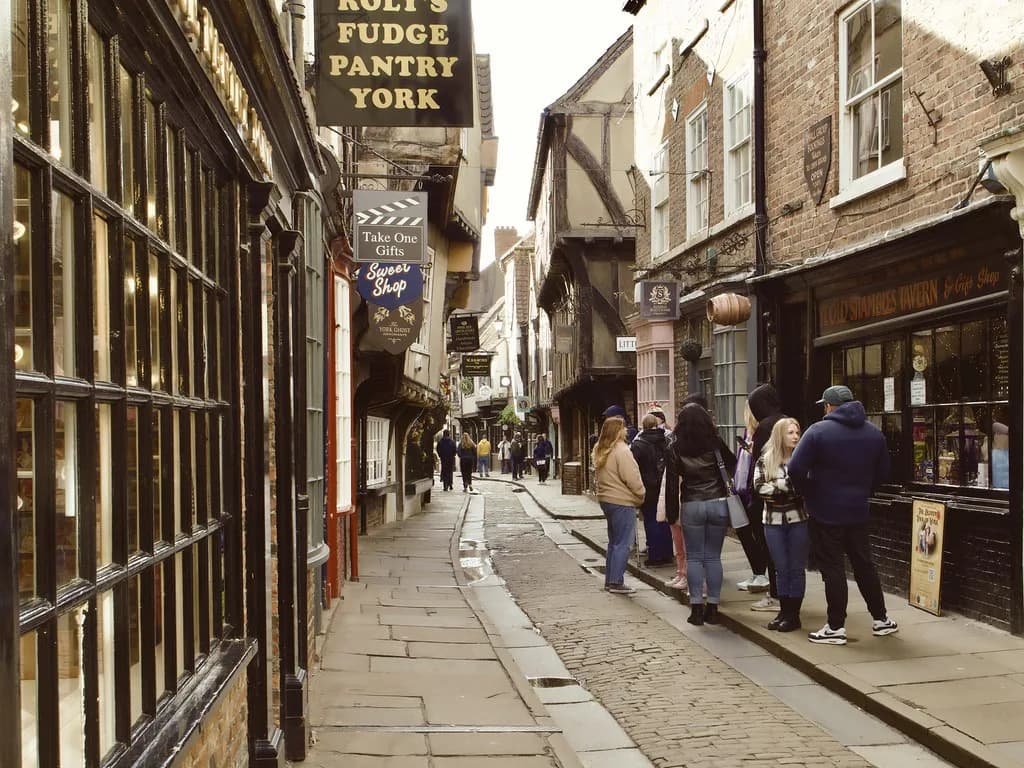
York's reputation for hauntings rests on stories and legends attached to its old streets and buildings rather than on documented fact. The Visit York city site leans into that theme, but treat any specific ghost story as folklore on a guided walk.
Do I need to book York's historic sites in advance?
The Minster, Clifford's Tower and the Jorvik Viking Centre all attract queues at busy times, so booking ahead where a site offers it saves time. Check each venue's own page for current days, since not every attraction opens daily.
Sources
Notes for your next city break
Optional updates to our UK city guides.
You might also like
Continue reading
More guides you'll find useful