
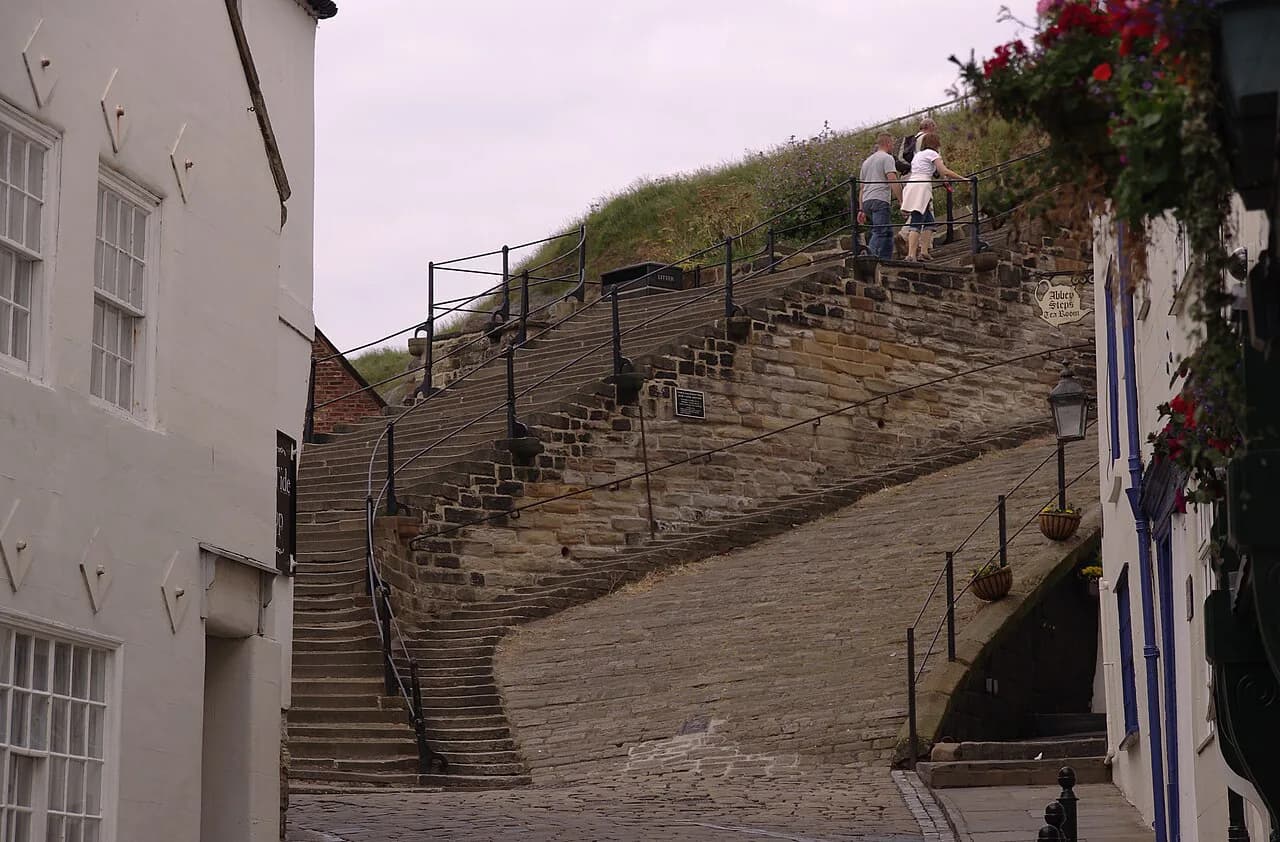
199 Steps Whitby: What to Expect on the Climb to the Abbey

The 199 Steps are a steep stone stairway rising from Whitby's old town to St Mary's Church and the clifftop ruins of Whitby Abbey, and climbing them is the classic way to arrive on the East Cliff. The walk up is free and open to anyone; the abbey ruins at the top sit behind a separate paid entry. Allow 20 to 30 minutes for the climb itself if you stop for photographs and breath, then longer at the top for the churchyard, the church and the harbour view.
What the 199 Steps Are
The steps form a stone staircase from the harbour side of the old town up the East Cliff to St Mary's Church, with Whitby Abbey just beyond the churchyard. They are the historic pedestrian route between the town and the clifftop, and the numbered markers let you track how far you have come. Treat the climb as a short walk with a serious gradient rather than a sight in itself.
Where the Steps Start
The bottom of the stairway sits at the foot of Church Street on the east bank of the River Esk, a short walk from the swing bridge that links the two halves of town. Coming from the harbour, follow the old town's narrow streets east until the steps rise ahead of you. If you are arriving by train or bus, cross the bridge first and then head for Church Street.
A Short History, and the Dracula Legend
Whitby's abbey was founded in 657 by St Hilda, was wrecked by the Vikings and later rebuilt as a Benedictine monastery before Henry VIII closed it in 1539, leaving the ruins that stand today. Bram Stoker stayed in Whitby in the 1890s and set early chapters of Dracula here, with the steps and the abbey churchyard among the places that feature in the story. Read the Dracula material as literary legend and Victorian Gothic atmosphere, not as local fact: it is the novel's pull, not evidence of anything supernatural, that brings visitors up the stairway.
Counting the Steps
There are 199 steps, as the name says, and Roman numerals mark intervals along the way so you can count as you climb. The stairs are thought to date back to 1340 in wood, replaced in stone in 1774, and the benches on the way up were reportedly built for pallbearers carrying coffins to St Mary's. Take the count as a bit of fun rather than a race; the markers make good resting points, and the climb pairs naturally with the town's other sights, such as the museums in Whitby.

The Climb: Gradient, Benches and Timing
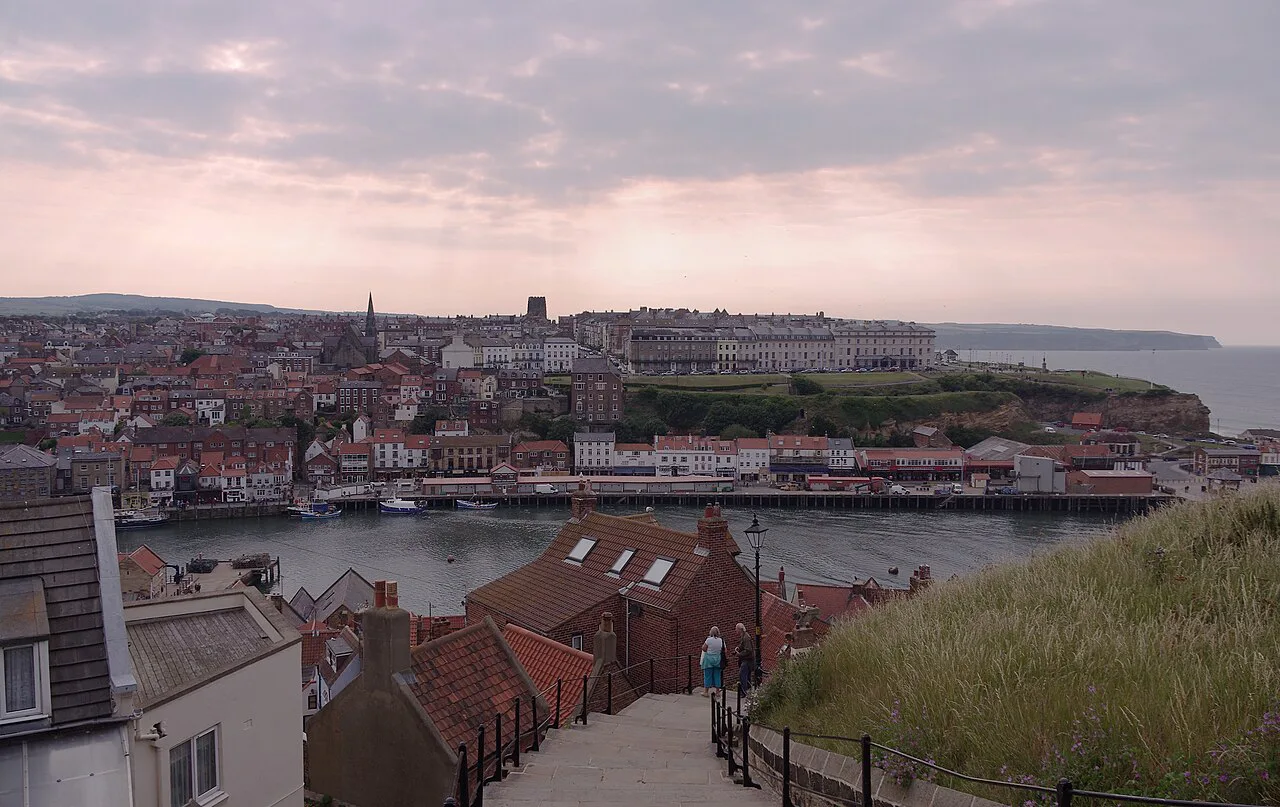
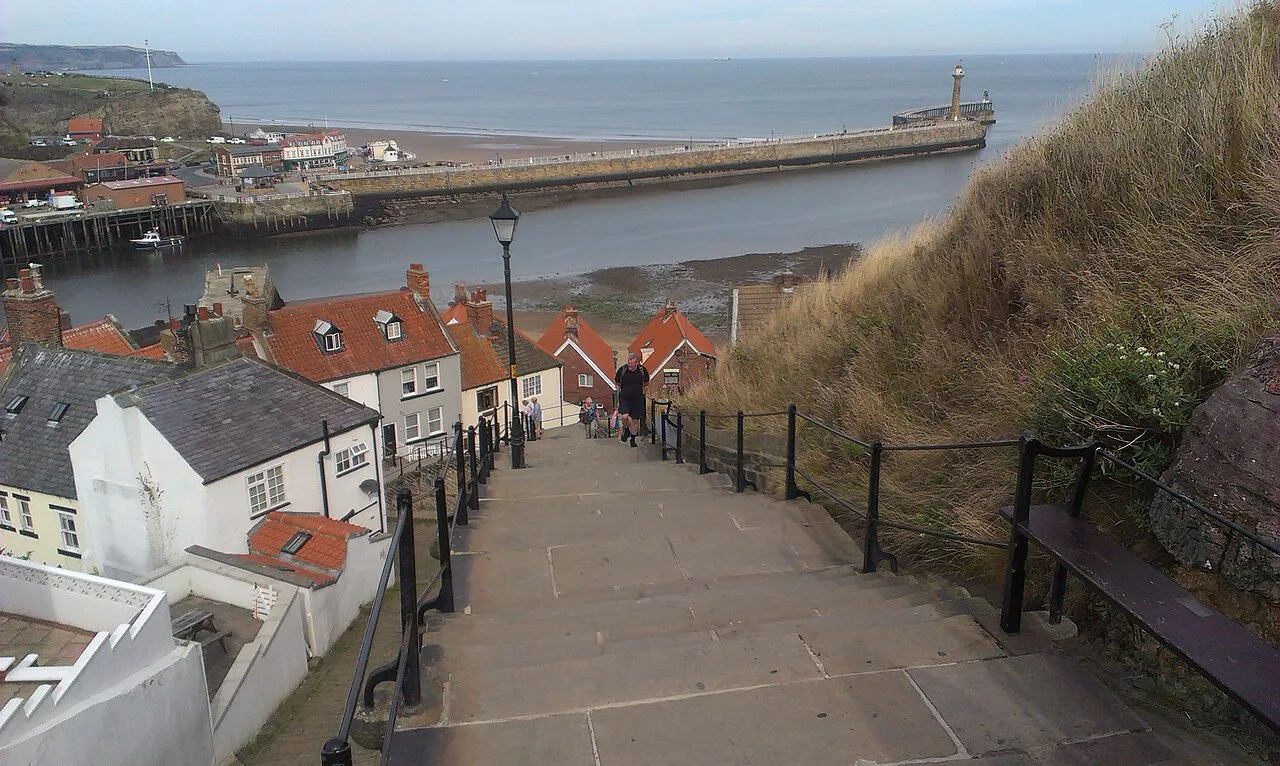
The climb is steep and twisting, and the stone treads can be slippery when wet, so wear shoes with grip rather than smooth soles. Benches are spaced along the route if you need to stop, and the view back over the harbour gives you a reason to pause anyway. Budget 20 to 30 minutes up at an easy pace, plus time at the top; anyone with limited mobility should consider the alternative approach by road instead.
At the Top: St Mary's Church, the Churchyard and the View
At the top you reach St Mary's Church and its churchyard, where weathered gravestones include skull-and-crossbones carvings near the entrance gate. The churchyard looks out over the town and the North Sea, and the view back down over the red rooftops and harbour is the photograph most visitors come for. Walk through the churchyard towards the abbey ruins to complete the climb.
Whitby Abbey at the Top of the Steps
Whitby Abbey is owned by English Heritage, and visiting the ruins inside the site requires a paid ticket separate from the climb; you can view the abbey over the wall from the road outside without paying. If the ruins themselves are the point of your visit, book and budget for the entry; if you mainly want the view and the churchyard, the free approach is enough. Enter through the English Heritage entrance near the churchyard.
Getting There from the Harbour
From the harbour and the swing bridge, the walk to the bottom of the steps is short, and you can combine it with a wander along the old town's streets. Whitby also has an open-top town bus tour run by Coastal & Country Coaches, useful if you would rather ride up to the clifftop than climb. Either way, the stairway is the arrival most visitors remember, and it slots easily into a wider list of things to do in Whitby.

Steps as a Constraint
The steps are not step-free, and the climb is steep enough to be hard work on a hot day or with a pushchair. Wear proper shoes, carry water, and avoid the stairway in ice or heavy rain if you are unsure on your feet. For a gentler route to the same clifftop, the road up to the abbey and church is the alternative, and the abbey can be seen from outside without climbing at all.
Nearby: Henrietta Street, Fortune's Kippers and the Whalebone Arch
At the bottom of the steps, Henrietta Street leads to Fortune's Kippers, a smokehouse that has been operating since 1872 and opens in the mornings until it sells out. Over on the West Cliff, the Whalebone Arch and the Captain Cook statue make a natural pairing with a harbour walk, and Pannett Park holds Whitby Museum and Pannett Art Gallery if you want an indoor break.
If you are building a longer break around the steps, the wider Whitby Attractions collection covers the harbour, the abbey and the town's museums so you can plan the climb as part of a half-day rather than a dash. If the indoor collections appeal after the climb, our guide to the museums in Whitby covers what is worth your time.
Plan Your Climb
Climb the 199 Steps in the morning if you can, pair them with the churchyard and a look at the abbey, then drop down to Henrietta Street for the smokehouse and a harbour wander. Check the abbey's opening arrangements and entry prices on the English Heritage listing before you go, and keep the climb itself as the free part of the day.
Explore more Whitby guides
Frequently Asked Questions
How many steps are there up to Whitby Abbey?
There are 199 steps, which is where the landmark gets its name. Roman numerals mark intervals along the stairway so you can count as you climb, and benches give you somewhere to stop.
Did Dracula go to Whitby Abbey?
Dracula is a fictional character, but Bram Stoker set early chapters of his novel in Whitby after staying in the town in the 1890s, and the steps and abbey churchyard feature in the story. Treat the vampire connection as literary legend and Gothic atmosphere rather than local fact.
Is it free to climb the 199 Steps?
Yes, the stairway itself is a public route and there is no charge to walk up. Whitby Abbey at the top is run by English Heritage and charges for entry to the ruins; you can view the abbey over the wall from outside without paying.
How long does it take to climb the 199 Steps?
Allow around 20 to 30 minutes to walk up at an easy pace with stops for the view, then longer at the top for St Mary's Church, the churchyard and the abbey. The climb is steep, so add time on warm days or if you are carrying bags.
Where do the 199 Steps start?
The bottom of the stairway is at the foot of Church Street in Whitby's old town, on the east bank of the River Esk and a short walk from the swing bridge. Follow Church Street east from the harbour and the steps rise ahead of you.
Can you avoid the steps and still reach Whitby Abbey?
Yes. A road leads up to the clifftop near St Mary's Church and the abbey, and the open-top town bus tour offers a ride around the main sights. The stairway is steep and not step-free, so the road is the easier option for anyone with limited mobility.