
Whitby Harbour: What to See and How to Plan Your Visit

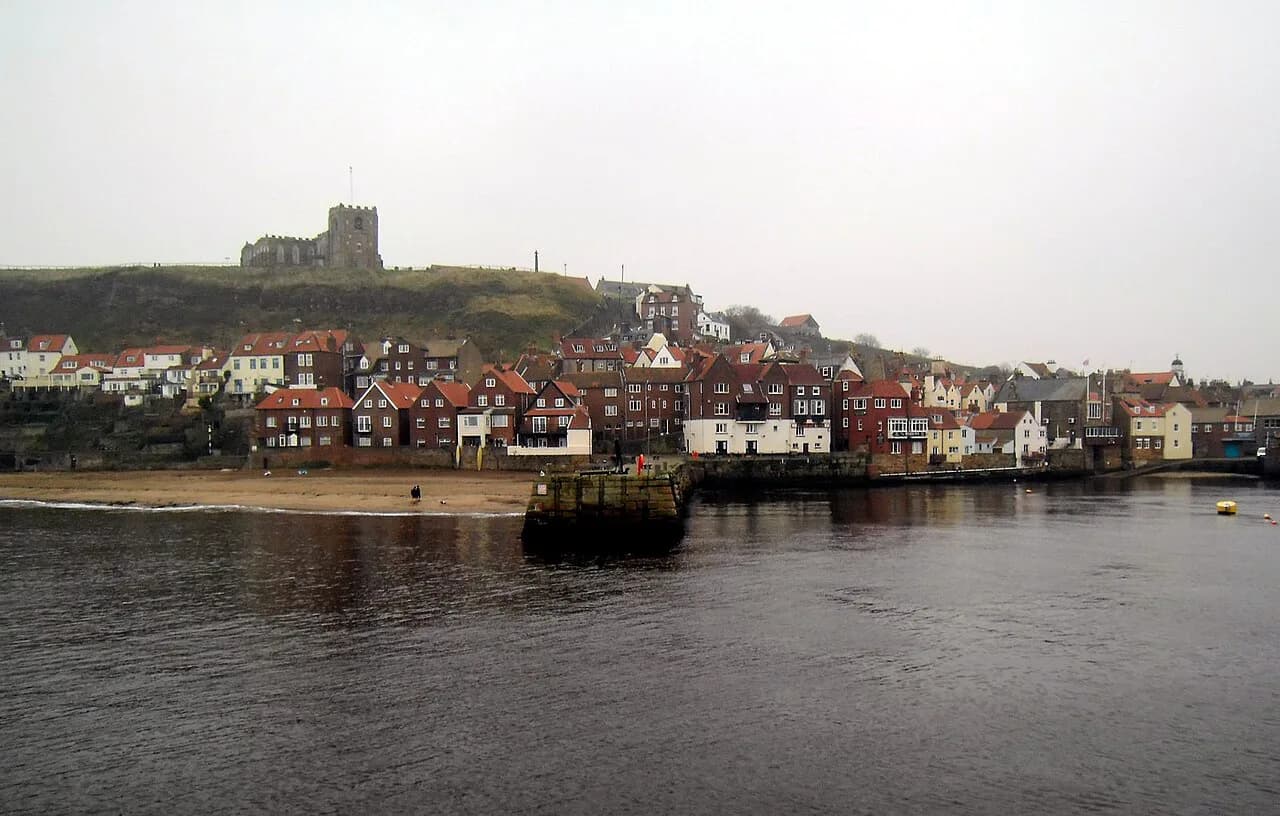
Whitby Harbour is the centre of the old town and the easiest way to get your bearings, because the River Esk splits Whitby into two distinct sides. The west bank holds the main streets and shops, while the east bank rises towards the abbey headland. Plan your day around crossing between the two rather than treating the harbour as a single sight.
Where the harbour sits and how it works
The harbour is a working port, not a marina development, and it is worth understanding its layout before you walk it. North Yorkshire Council describes the inner harbour as divided between a lower harbour and an upper harbour, with the Whitby Fish Quay on the west side of the outer harbour and a long list of named wharves and jetties inside.
The published approximate depths give a sense of scale: roughly 2m at the Whitby Fish Quay and Endeavour Wharf and about 1.5m at New Quay Road, Dock End Basin, Eskside Wharf and Church Street Jetty. That makes it a shallow, tidal harbour rather than a deep-water marina, with commercial craft rather than pleasure boats dominating the inner basins.
A short history of the port
Whitby Harbour has been the town's economic lifeblood since at least the Middle Ages, when it was a straightforward fishing port. Over the centuries it became a centre for shipbuilding and whaling before settling into the fishing and tourism mix you see today, which explains the mix of quayside sheds and holiday-facing frontage.
What to see on the water
The appeal of the harbour is the working traffic: trawlers landing catches, cargo vessels using the wharves and small boats moving between the basins. The Whitby Fish Quay runs 214m along the west side of the outer harbour, and visiting fishing vessels are welcomed at landing berths beside it in the lower harbour. That is the closest most visitors will get to a genuinely active port in the middle of a seaside town.
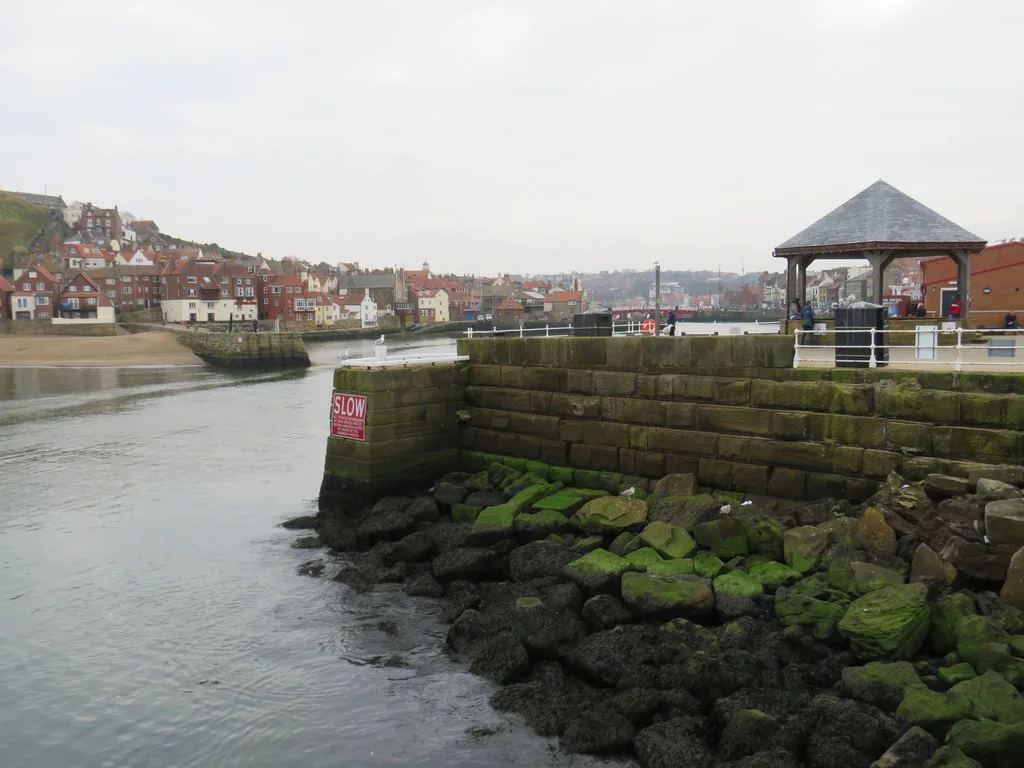
The piers and the harbour mouth are where the sea views open up, but they are exposed structures with no shelter. On a windy day the walk out along them is bracing and short; on a calm one it is the best place to watch boats come and go.
The fish quay: a working area, not an attraction
Treat the fish quay as a place to look, not a place to wander. The council states that the Whitby Fish Quay is reserved for vessels landing fish products, and the New Quay Road and Dock End Basin areas are reserved for fishing and commercial craft only, with privately owned craft not allowed to berth there. Refuelling, ice, agents and a shellfish facility are all part of the working setup rather than visitor services.
Fish market auctions take place on the refrigerated Whitby Fish Market, and agents handle selling and buying on the quay. Mooring areas are allocated by the harbour office and charges apply to moored vessels and landed fishery products, so the harbour is a business first and a photo opportunity second.
From 1 October to 31 March each year, New Quay Road is designated as a refuge berth for trawlers, so expect more vessels crowding the upper harbour in winter. Keep clear of working boats and their gear, and watch for vehicles on the quay rather than stepping into the road for a better angle.

Walking the harbour: a route and how long to allow
A sensible route is to start on the west bank, follow the waterfront past the quays and cross to the east side, then climb towards the abbey headland. The river crossing itself is short, but the harbour is spread out along both banks, so give the circuit a half day if you want to stop for photos, coffee and a look at the boats.
The footbridge over the Esk at the town centre is the obvious crossing point and the pivot of any harbour walk, connecting the shop-lined west bank with the narrow streets of the east. From there, the climb to the headland is what takes the time, not the waterfront.
Expect steps, cobbles and gradients rather than a flat promenade, and allow extra minutes for crowds in summer. If you want the full circuit with the church and abbey, see the wider set of Whitby Attractions for what sits at each end of the walk.
Getting there: on foot and by train
Whitby Harbour is easy to reach on foot from the town centre, and the railway station sits within walking distance of the waterfront on the west bank. That makes the harbour the natural first stop if you arrive by train: drop your bag, walk down to the quay and orientate yourself between the two banks before heading anywhere else.
If you are coming for the big sights, remember the harbour is the crossroads rather than the destination. Whitby Abbey sits on the East Cliff above the east bank, reached by climbing through the old town, and the beach runs north from the west bank.
Boats and trips from the harbour
The harbour is an active base for fishing and commercial craft, and the council's published information covers mooring, landing and facilities for vessels. For leisure sailings and boat trips, check locally on the quay or at the tourist information point, as operators, timetables and fares vary.

Nearby: the abbey, the old town and the beach
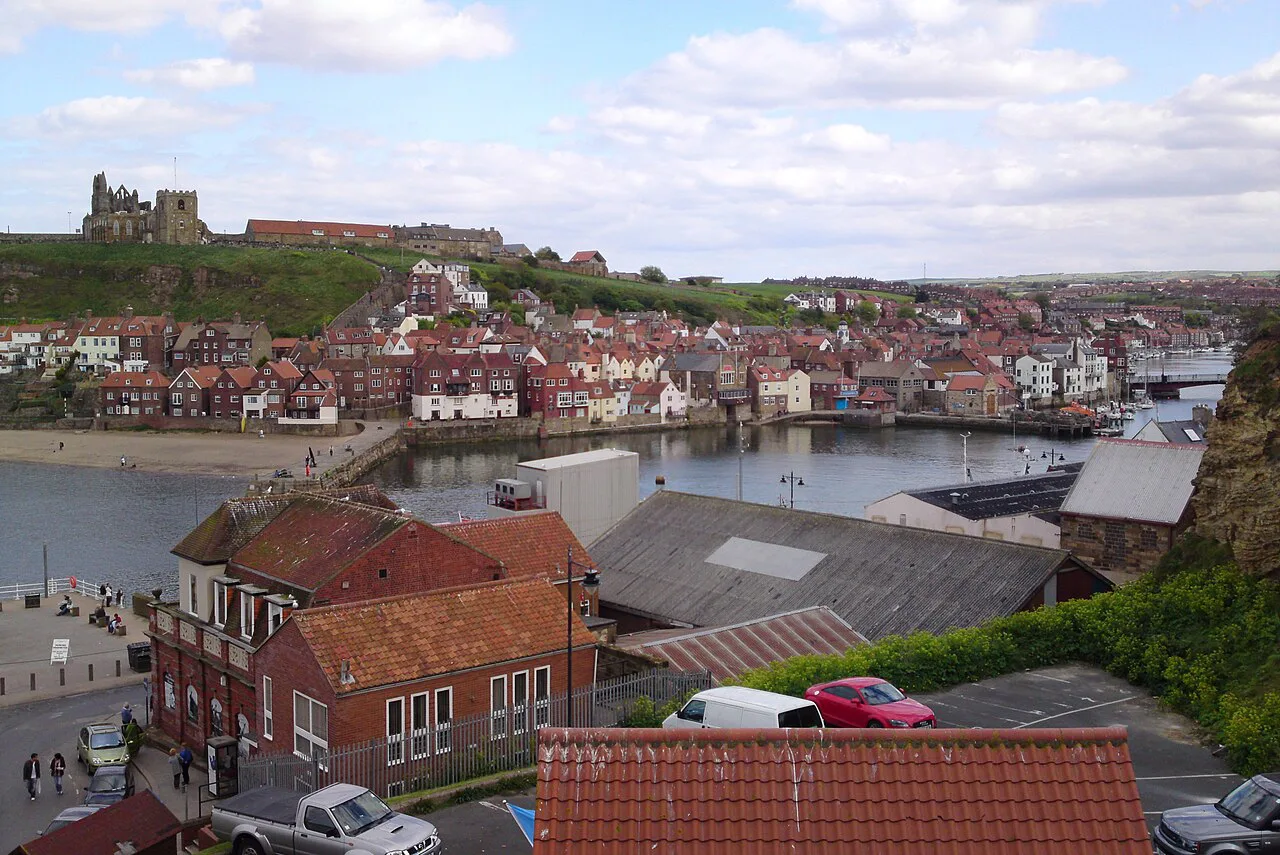
The harbour is your starting point for the rest of Whitby. Head east and up for the ruins of Whitby Abbey, cared for by English Heritage, where the headland gives the classic view back over the piers and out to sea.
The east bank climb also brings you past the Captain Cook Memorial Museum, housed in the building where the young Cook lodged while apprenticed to a Whitby shipowner, on Grape Lane. It is a natural pairing with the harbour because Whitby's shipbuilding past is what made the town a training ground for sailors.
Behind the east bank, the 199 Steps lead up to St Mary's Church and the abbey ruins, a steep but short climb that gives you the harbour in one frame from the top. Give the ascent its own quarter of an hour and take it slowly if the weather is warm.
On the west side, Whitby Museum and the Pannett Art Gallery sit together in Pannett Park, a short walk uphill from the harbour. The museum covers local shipping, whaling and fossils, which gives context to everything you have just seen on the water.
Whitby's beach is the natural next stop after the harbour, a broad sweep of sand on the west side that draws families in summer. If you are planning a full day in the town, the list of things to do in Whitby sets the harbour alongside the beach, the abbey and the museum.
Practical points: tides, weather and the wind
The piers are exposed in bad weather, with no shelter and a drop down to deep water at the harbour mouth, so keep children close and skip the walk if the wind is up. Harbour depths vary with the tide, and the council's figures are approximate soundings, which matters if you are arriving by boat.
The fish quay and commercial wharves are working areas rather than visitor spaces, and mooring rules are enforced by the harbour office. Check current fees and access arrangements with the harbour office before travelling if your plans involve a boat.
Plan Your Visit
Whitby Harbour is worth an hour if you walk the waterfront and half a day if you use it as the base for the abbey, the old town and the beach. Go in the morning to watch the working port at its busiest, and keep the piers for calm weather. If you enjoy comparing working ports around the coast, Dover Harbour offers another waterfront to explore.
Explore more Whitby guides
Frequently Asked Questions
How deep is Whitby Harbour?
Published approximate depths are about 2m at the Whitby Fish Quay and Endeavour Wharf, and roughly 1.5m at New Quay Road, Dock End Basin, Eskside Wharf and Church Street Jetty. These are soundings rather than fixed depths, so they change with the tide.
Where is the old part of Whitby?
The old town sits on the east bank of the River Esk, reached by crossing from the town centre and climbing through narrow streets towards the abbey headland. The harbour is the natural starting point and divides the two halves of the town.
How long does it take to walk around Whitby Harbour?
A simple loop of the waterfront takes about an hour, while a full circuit crossing the river and climbing to the abbey headland is easily half a day. Steps, cobbles and summer crowds slow the pace.
Does Whitby have a marina?
Whitby Harbour is a working port rather than a purpose-built marina, with the fish quay and most inner basins reserved for fishing and commercial craft. Leisure craft are not permitted to berth in the New Quay Road and Dock End Basin areas.
Can you take boat trips from Whitby Harbour?
The harbour is an active base for fishing and commercial vessels, but public trip operators, timetables and fares are not listed in the council's harbour information. Ask locally on the quay if a boat trip is part of your plan.
What is Whitby famous for?
Whitby is known for its harbour, its abbey ruins on the East Cliff and its links to Captain Cook, who lodged on Grape Lane as an apprentice. The town's shipbuilding and whaling past shaped the port you see today.