
St Mary's Church, Whitby: A Visitor's Guide to the Clifftop Church

St Mary's Church is the parish church on Whitby's East Cliff, at the head of the 199 steps and a short walk from the abbey ruins. The climb is the decision point of any visit: it shapes how long you allow, what you carry and whether you pair the church with the abbey in one outing.
The reward is one of the strangest interiors in North Yorkshire, a Georgian scheme of pews and galleries fitted by local shipwrights into a medieval shell. Add the churchyard, with Cædmon's Cross and generations of clifftop burials, and this is a 45-minute stop rather than a five-minute one.
Where St Mary's Church Is
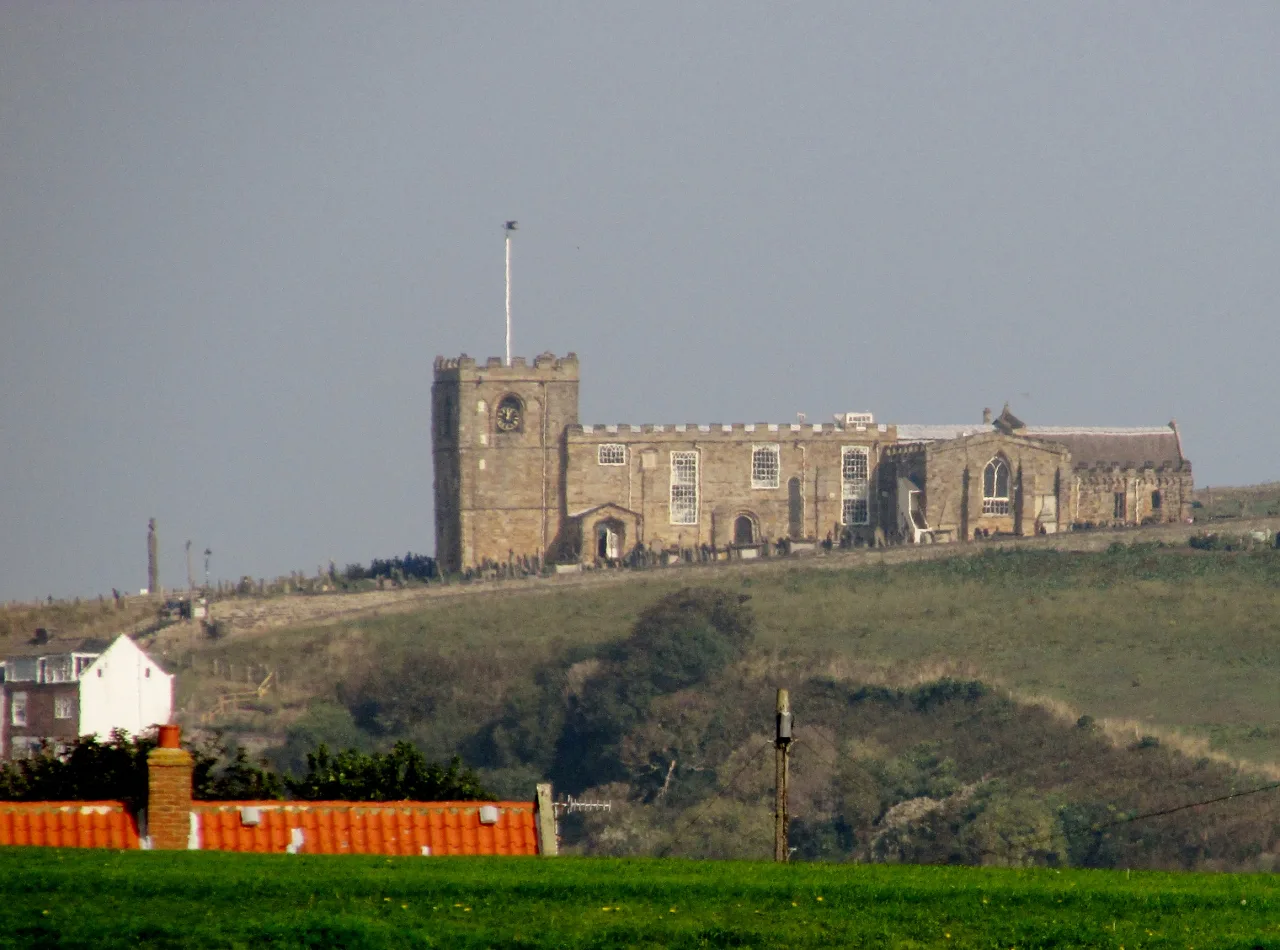
The church stands high on the East Cliff above the town, close to the site of the Anglo-Saxon monastery that hosted the Synod of Whitby in 667AD. It faces the abbey ruins across the clifftop, with the harbour and the streets of the old town spread out below on the other side.
That position is the whole point. You are not dropping into a town-centre parish church between shops; you are climbing to a headland where the church, the graveyard and the abbey sit together. Plan the church as part of that clifftop group, which is covered in the wider guide to Whitby Attractions.
Getting There: The 199 Steps
Most visitors arrive on foot via the 199 steps, the stepped path up the East Cliff that was first recorded in 1340 and is probably older. Before the churchyard closed to new burials in the mid-19th century, coffins were carried up these steps rather than taken by road, which tells you something about the gradient.
The climb is short but steady, with uneven stone treads and no shortcut for tired legs once you start. Wear shoes with grip, leave pushchairs and heavy bags behind if you can, and build in a pause partway up. The full step-by-step route is set out in the guide to the 199 Steps Whitby.
If the steps are beyond you, the Whitby Tour Bus is described as an alternative way up to the clifftop, running from the town below. Fares, timetables and seasonal operation can change, so check before relying on it.
The Churchyard and Cædmon's Cross
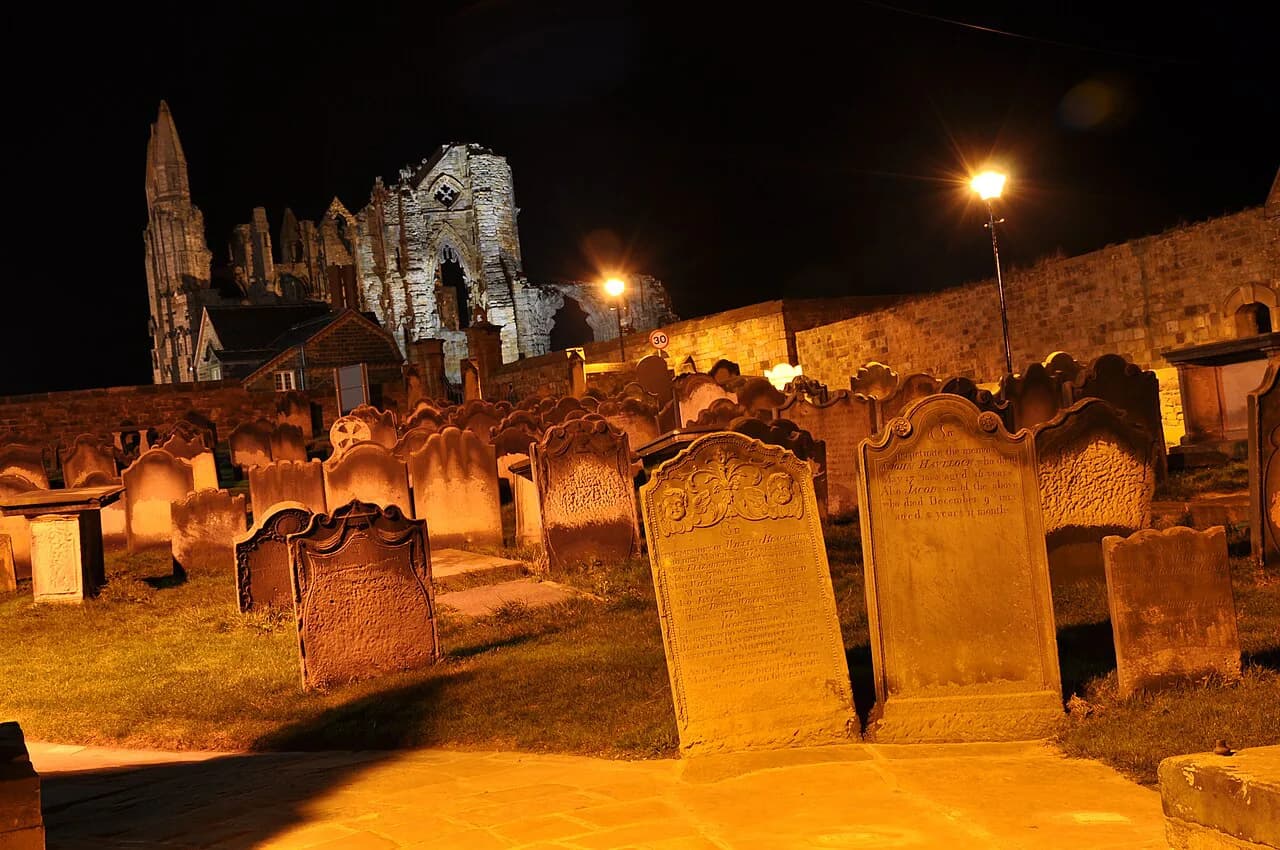
The churchyard is a destination in its own right, wrapping the church on a clifftop where wind and salt have done their work on the stones. The churchyard carries around 1,300 memorial records, so it rewards a slow wander rather than a quick circuit.
Cædmon's Cross stands in the churchyard, erected in 1898 to designs by Charles C. Hodges and Robert Beall, and celebrates the area's pre-Conquest heritage. Treat the churchyard as history and landscape rather than a grave-finding service, and keep to paths where the ground is worn.
Bodies were carried up the steps for burial here until the mid-19th century, which is why the churchyard feels so full and so layered. Give it 15 minutes on top of your time inside the church, more if you want to read inscriptions.
A Short History of the Church
The present church was refounded in 1110, and its oldest parts date from the 12th century. It stands close to the site of the Anglo-Saxon monastery associated with the Synod of Whitby in 667AD, a landmark in the history of the Church in England.
The building you see is a palimpsest rather than a single period. The 18th century brought radical change: domestic-looking Georgian windows were inserted, and the north transept was extended out to the west in 1818. The result is a medieval structure wearing a Georgian face, which is exactly why it surprises people who expect a Gothic ruin.

What to See Inside: Shipwrights' Pews and Galleries
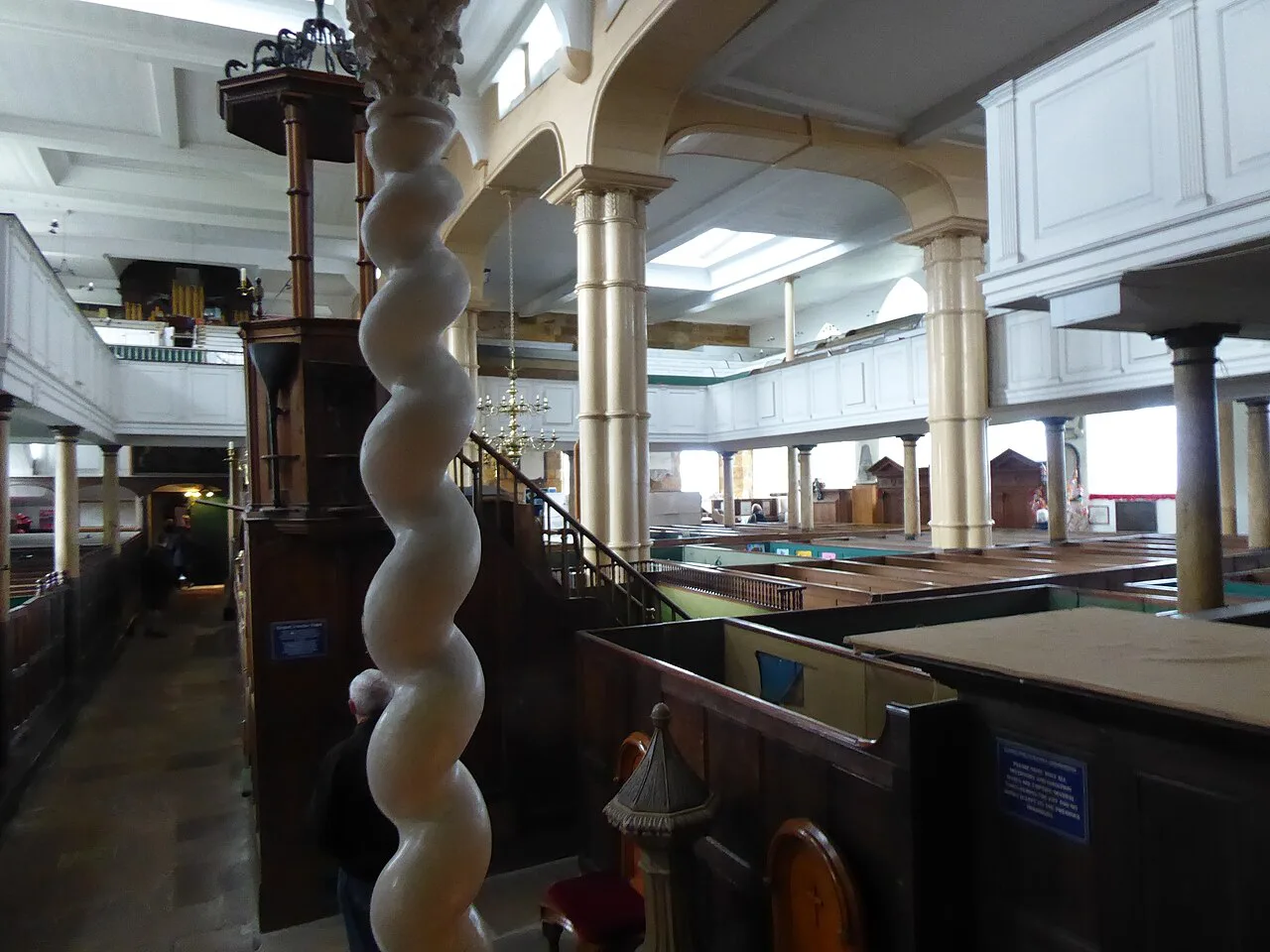
Step inside and the impression is of a Georgian preaching box dropped into a medieval church. Pews and galleries were built by the town's shipwrights between the early 17th and late 18th centuries, and the timber work carries the confidence of people used to fitting out ships.
Look up at the galleries, including the Cholmley Pew, which extends across the chancel arch. Such pews were reached by an external staircase, a rare feature in an English church, though the practice was common in Scotland when medieval churches were converted for Presbyterian worship. Find the staircase outside before you go in, and the interior suddenly makes sense.
The triple pulpit of 1778 survives in the church, and in the early 19th century ear trumpets were attached to it so that the deaf wife of Reverend Andrews could hear her husband's sermons. The church is Grade I listed, so the fittings you are looking at are protected fabric rather than staged decoration.
Why the Georgian Interior Survived
By the 1860s the Ecclesiological Movement had turned taste back towards medieval architecture, and St Mary's Georgian fittings fell out of fashion. Its own rector, Reverend William Keane, called the church perhaps the most depraved sacred building in the kingdom in that decade, which is a fair measure of how strongly opinions ran.
What saved the interior was money moving elsewhere. Later 19th-century patronage went into building fashionable new churches on the West Cliff, such as St Hilda's, completed in 1889, rather than into remodelling St Mary's. The old church was left with its shipwrights' work intact, which is the reason to visit today.
How Long to Allow and Pairing It With Whitby Abbey
Allow about 45 minutes for the church and churchyard, plus the climb, which takes most people 10 to 15 minutes at an easy pace. Add longer if you want to read the inscriptions or sit with the view over the harbour and the River Esk below.
The obvious pairing is Whitby Abbey next door. The ruins are run by English Heritage, and because the church and abbey share the same clifftop, walking between them takes minutes rather than a journey. Do the church first if you want the interior before the weather turns, then cross to the ruins.

Practical Points Before You Set Out
St Mary's is a working parish church, so worship takes priority over sightseeing. The parish and the Church of England's Church Near You listing publish current opening arrangements, and that is where to confirm access before climbing the steps.
Expect uneven floors and steps inside, narrow gallery stairs and a clifftop churchyard with worn paths; this is not a step-free visit. St Mary's is a working parish church rather than a ticketed attraction, so keep your budget for the abbey and for the town below.
Nearby: The Abbey, the Town and the Museums
Whitby Abbey is the headline neighbour, its ruins standing on the same headland and visible from the churchyard. Tickets, opening days and seasonal hours come from English Heritage, and booking ahead pays off in peak season.
Down in the old town, the Captain Cook Memorial Museum on Grape Lane occupies the house where the apprentice Cook lodged, and the harbour itself is worth an hour of anyone's time. For a wet afternoon, Whitby Museum in Pannett Park pairs with the Pannett Art Gallery under one roof.
If you are planning a full day, our guide to things to do in Whitby orders the abbey, harbour and museums sensibly around the climb. Otherwise, walk back down the steps and follow the River Esk into the town for tea and a look at the Swing Bridge.
Plan Your Visit
St Mary's Church is the reason to take the 199 steps slowly: a clifftop churchyard, a rare Georgian interior built by shipwrights, and the abbey ruins a few minutes away. Build it into a half-day on the East Cliff rather than a quick detour.
Frequently Asked Questions
How do you get to St Mary's Church in Whitby?
On foot via the 199 steps up the East Cliff, first recorded in 1340, which bring you out at the churchyard beside the abbey ruins. The Whitby Tour Bus is an alternative way up to the clifftop; check its current timetable and fares before relying on it.
What can you see inside St Mary's Church?
A Georgian interior fitted into a medieval shell: pews and galleries built by Whitby shipwrights between the early 17th and late 18th centuries, the Cholmley Pew extending across the chancel arch, Georgian windows inserted in the 18th century and a triple pulpit of 1778. Outside, look for the external staircase that once served the galleries.
Is St Mary's Church next to Whitby Abbey?
Yes. The church stands on the same East Cliff headland, close to the site of the Anglo-Saxon monastery and a short walk from the abbey ruins, which are run by English Heritage. Walking between the two takes minutes.
What is Cædmon's Cross?
A cross in the churchyard erected in 1898, designed by Charles C. Hodges and Robert Beall, celebrating the area's pre-Conquest heritage. It is a separate reason to linger in the churchyard rather than heading straight for the abbey.
How long does it take to climb the 199 steps?
Most people take 10 to 15 minutes at an easy pace, pausing on the way. The treads are uneven and the gradient is steady, so wear shoes with grip and allow extra time if you are carrying children or bags.
Why does a medieval church have a Georgian interior?
The 18th century brought radical alterations, including Georgian windows and the westward extension of the north transept in 1818, along with shipwrights' pews and galleries. Later 19th-century patronage went to new churches on the West Cliff such as St Hilda's, completed in 1889, so St Mary's interior was never remodelled.
Do I need to book tickets for St Mary's Church?
The church publishes no ticket price; it is a working parish church, so worship takes priority over sightseeing. Check the parish and the Church Near You listing for current opening arrangements, and book Whitby Abbey tickets through English Heritage separately.
What else is near St Mary's Church?
Whitby Abbey ruins on the same headland, the harbour and old town below, the Captain Cook Memorial Museum on Grape Lane, and Whitby Museum with the Pannett Art Gallery in Pannett Park for a wet afternoon.